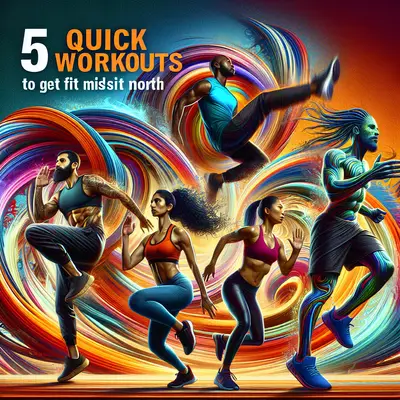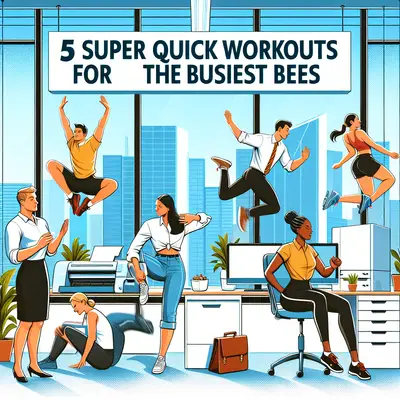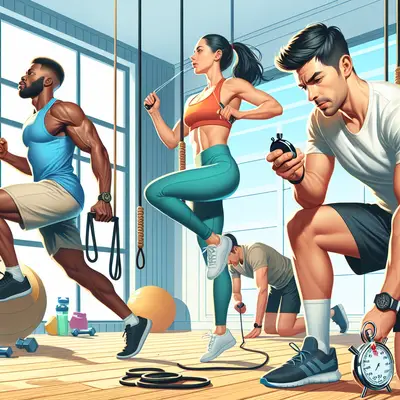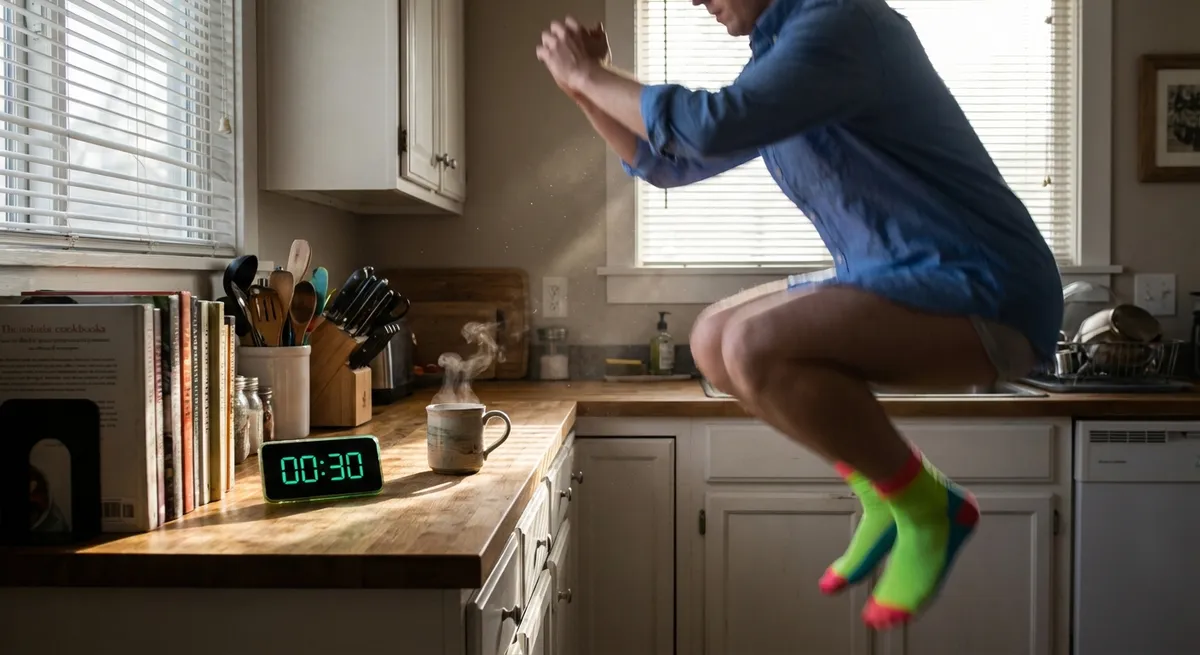
If your calendar looks like a game of Tetris, but you still want to feel strong, energized, and clear-headed, you’re in the right place. You don’t need a 60-minute gym session to make real progress—what you need is smart, focused bursts of movement that plug straight into your day.
Welcome to burst-mode workouts: short, sharp, no-fuss moves that respect your time and still deliver results.
Why Quick Workouts Actually Work
Short sessions aren’t “fitness lite”—they’re science-backed, efficiency-heavy.
High-intensity interval training (HIIT) and focused micro-sessions can improve cardio fitness, support fat loss, and boost insulin sensitivity in less time than traditional steady-state workouts. The key isn’t duration; it’s intensity and consistency.
When you push hard for brief periods, you:
- Spike your heart rate quickly, then recover—great for cardiovascular health.
- Recruit more muscle fibers in less time, especially with compound moves.
- Trigger an “afterburn” effect where your body keeps burning calories post-workout.
- Get a fast mental reset that clears brain fog and sharpens focus.
You’re not trying to “do it all” in one epic session. You’re stacking small, intentional wins that add up like compound interest.
Tip 1: The 6-Minute Power Core Reset
Core work doesn’t need floor space, a mat, or a full routine. You just need six focused minutes you can drop between meetings or at the end of your workday.
Try this quick sequence:
- 40 seconds plank
- 20 seconds rest
- 40 seconds dead bug (on your back, opposite arm/leg reach)
- 20 seconds rest
- 40 seconds side plank (right)
- 20 seconds rest
- 40 seconds side plank (left)
- 20 seconds rest
- 40 seconds glute bridge
- 20 seconds rest
Why it works fast:
- Planks and dead bugs challenge deep core stabilizers, not just “abs on fire.”
- Side planks hit obliques without twisting your spine.
- Glute bridges balance all that sitting by waking up your backside.
No equipment, no sweat towel needed—just enough effort to reset your posture and support your back for the rest of the day.
Tip 2: The 5-Minute “Stair Sprint” Cardio Hit
If you’ve got stairs, you’ve got a cardio session on standby.
Here’s a 5-minute stair blast:
- 30 seconds: walk or jog up & down
- 30 seconds: rest (easy walking or standing)
- 30 seconds: faster pace up, walk down
- 30 seconds: rest
- 30 seconds: double-step up (if safe), walk down
- 30 seconds: rest
- 30 seconds: fast walk or light jog up, down
- 30 seconds: rest
- 30 seconds: best effort up, controlled walk down
- 30 seconds: slow walk cooldown
Why it fits busy lives:
- Zero warm-up hassle—your first set is your warm-up.
- You control intensity with speed and step size.
- It’s location-flexible: office stairs, home stairs, apartment building.
Focus on posture (chest up, eyes forward) and safety (hold rail if needed). You should feel pleasantly breathless, not destroyed.
Tip 3: Desk-Friendly Strength Circuit (No Sweat, Real Gains)
You can sneak in strength work without looking like you just ran a marathon in your work clothes. This mini circuit keeps you composed but challenged.
Run through this 2–3 times:
- 12–15 chair squats (sit → stand without using hands)
- 10–12 desk incline push-ups (hands on sturdy desk, body straight)
- 12–15 standing calf raises (hold chair or wall for balance)
- 10–12 backpack rows (load backpack, hinge slightly, pull to ribs)
Why this works:
- Chair squats and push-ups hit big muscle groups—legs, glutes, chest, triceps.
- Calf raises support better walking/running and ankle stability.
- Rows fight “computer hunch” by strengthening upper back.
You can do one round between calls for a 3–4 minute boost or stack them for a 10-minute “secret strength” session.
Tip 4: 4-Minute Mobility Flush for Stiff Bodies
When everything feels tight, the last thing you want is burpees. Swap “go hard” for “move better” with a fast mobility flush that makes every other workout easier.
Try this 4-minute flow:
- 30 seconds: cat-cow (on hands and knees, arch and round spine)
- 30 seconds: hip flexor stretch (half-kneeling lunge, switch legs at 15s)
- 30 seconds: standing hamstring sweep (heel forward, sweep hands toward toes, switch legs)
- 30 seconds: chest opener (clasp hands behind back, gently lift)
- Repeat the sequence once
Why mobility matters (especially when you’re busy):
- Less stiffness = fewer “I’ll skip it, everything hurts” days.
- Better range of motion = stronger, safer strength work.
- Quick stretch blocks break the “all-day chair” posture pattern.
No deep yoga vibes required; this is fast, functional, and built for real-world bodies.
Tip 5: Micro-Sprint Breaks for All-Day Energy
Instead of dragging through your afternoon, drop tiny “energy blocks” into your day. Think 60 seconds of effort, several times.
Sample moves you can rotate:
- Fast bodyweight squats
- Marching high knees (low impact)
- Shadow boxing (punch the air, light footwork)
- Low step-ups on a stable step or low bench
- Quick “good mornings” (hands on hips, hinge at hips, stand tall)
Plug them in like this:
- Once every hour for 60 seconds
- Or 3–5 short bursts spaced through your morning and afternoon
Why it works:
- Short spikes in heart rate wake your brain up—great for focus.
- You accumulate meaningful movement without needing a time block.
- It breaks up sedentary time, which is linked to worse metabolic health even if you “work out” once a day.
These bursts are so short you have no time to talk yourself out of them.
Conclusion
Busy doesn’t have to mean burned out or out of shape. When you switch from “perfect workouts” to “burst-mode workouts,” everything gets lighter:
- Shorter sessions are easier to start.
- Easier starts are easier to repeat.
- Repeated efforts are what actually change your body and energy.
Pick just one of these tips and try it today—6-minute core, 5-minute stairs, desk circuit, mobility flush, or micro-sprint breaks. Once that feels normal, stack in a second. Your schedule doesn’t need to shrink for your fitness to grow.
Sources
- American College of Sports Medicine – High-Intensity Interval Training - Overview of HIIT benefits and how shorter, intense efforts can improve fitness
- Harvard T.H. Chan School of Public Health – The Importance of Strength Training - Explains why resistance work matters for busy adults and how to fit it in
- Mayo Clinic – Exercise: 7 Benefits of Regular Physical Activity - General health benefits of consistent movement, even in shorter bouts
- Centers for Disease Control and Prevention – Physical Activity Guidelines - Official recommendations on activity levels, including how to break movement into smaller segments
- Cleveland Clinic – Stretching: Focus on Flexibility - Covers the role of mobility and stretching in reducing stiffness and improving performance
Key Takeaway
The most important thing to remember from this article is that this information can change how you think about Quick Workouts.