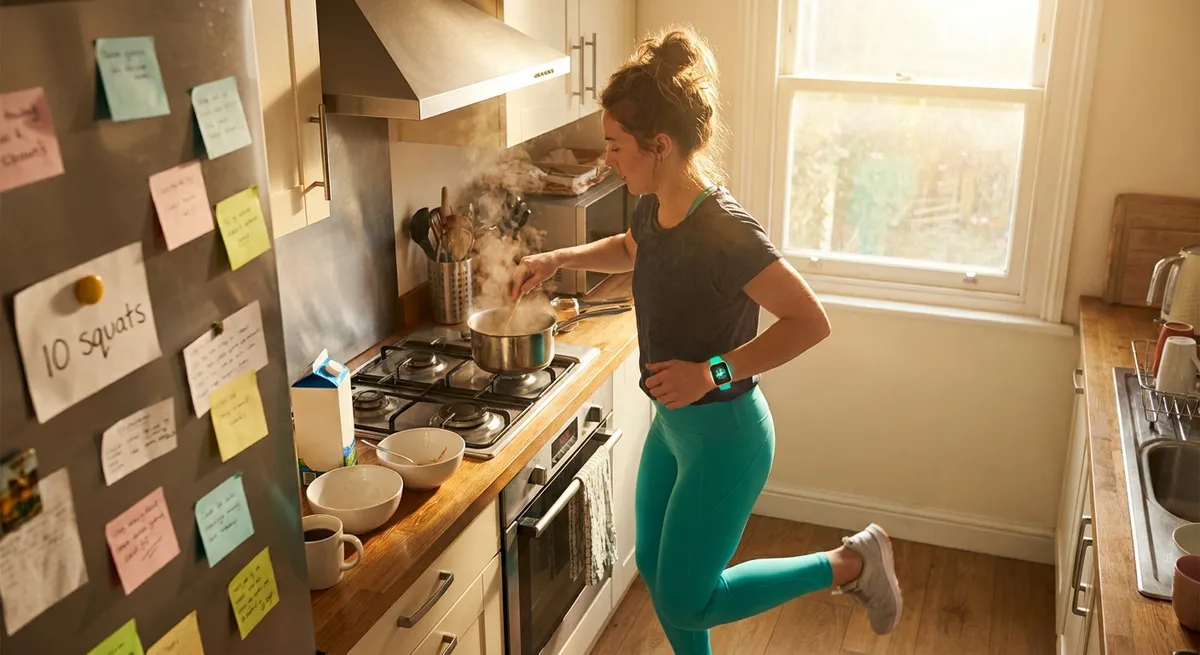
You don’t need a color‑coded planner or a two-hour gym block to get fitter. You just need smart, sneaky upgrades to what you’re already doing. Clock-smart fitness is all about stacking movement onto your normal day so your body wins while your calendar stays packed.
Why Time-Crunched Workouts Actually Work
Here’s the good news: your body doesn’t care if you move in one long block or in short, sharp bursts. What matters is intensity and consistency. Research shows that brief bouts of movement throughout the day can improve heart health, boost mood, and help manage blood sugar—huge wins when you’re juggling work, family, and everything else.
Think of your day as a series of “movement slots” instead of one giant workout you never quite get to. Waiting for a Zoom call to start? That’s a slot. Coffee brewing? Another slot. Walking from your car to the office? Jackpot. When you see your schedule this way, you stop hunting for time and start using the time you already have.
The trick is to lower the friction: no special clothes, no equipment, no commute. Just quick moves that fit into what you’re already doing. Let’s plug in five fast tips that upgrade your whole day without blowing up your to‑do list.
Tip 1: Turn Every Transition Into a 60-Second Power Break
Between tasks is where time leaks—and where you can quietly level up your fitness.
Before you switch tabs, apps, or rooms, drop in a 60‑second move. Set a tiny rule, like: “Every time I finish an email block, I move for one minute.” Rotate through simple bodyweight options:
- 20–30 bodyweight squats
- 30 seconds of fast marching in place + 30 seconds of arm circles
- 10–15 incline pushups on a desk or countertop
- 30 seconds of jumping jacks + 30 seconds of easy pacing
These “transition bursts” wake up your muscles and brain, help counter sitting time, and cost you less than the time you’d spend scrolling. Stack five of these across your day and you’ve already built a mini workout.
Tip 2: Upgrade Your Walking Into Mini Cardio Sessions
You’re already walking—to the car, the train, the kitchen, the mailbox. Turn some of those steps into cardio with zero extra time:
- Pick one regular route (parking lot, hallway, dog walk) and walk it like you’re slightly late—shorter, faster steps, arms swinging.
- Add “speed pockets”: walk easy for 30 seconds, then power walk for 30 seconds, and repeat until you arrive.
- Take the longer route when it doesn’t actually cost time (e.g., walking inside while you’re on a call).
This turns passive steps into active training for your heart and lungs. Over a week, those faster intervals add up to legit cardio conditioning—no treadmill required.
Tip 3: Anchor Strength Moves to Daily Habits
Pair one strength move with a habit you never skip. That way, you don’t need reminders—your routine becomes the reminder.
Try combos like:
- After brushing your teeth: 15–20 squats
- While your coffee brews: 10–15 countertop pushups
- Before your shower: 20–30 seconds of wall sit
- After every bathroom break: 10 calf raises on each leg
Choose 1–2 moves and keep them ridiculously simple. The goal is consistency, not collapse-on-the-floor intensity. This “habit anchoring” turns ordinary routines into automatic strength sessions.
Tip 4: Use Screens as Your Movement Alarm
If your screen time is high, let it work for you instead of against you.
- Every episode or YouTube video: move during the opening credits or ads.
- Every 30 minutes of computer time: stand up, stretch your hips and chest, then do 30–60 seconds of light movement (marching, hip circles, shoulder rolls).
- Scrolling break: before you open social apps, do one set of any move (10 squats, 10 pushups on the counter, 10 lunges total). Then scroll.
You’re not banning screens—you’re bundling them with movement so your body gets a cut of that time.
Tip 5: Keep a 5-Minute “Emergency Workout” on Standby
Some days will blow up. Instead of declaring the day a fitness failure, drop in a tiny “emergency workout” you can do anywhere, in normal clothes, in five minutes.
Example 5-minute circuit (no equipment):
- 40 seconds bodyweight squats, 20 seconds rest
- 40 seconds incline pushups on a counter, 20 seconds rest
- 40 seconds reverse lunges (or step-backs), 20 seconds rest
- 40 seconds marching in place with high knees, 20 seconds rest
- 40 seconds plank on hands or elbows, 20 seconds rest
Set a timer, run through once, done. It won’t drench you in sweat, but it keeps your “I’m someone who moves” identity intact—and that’s what drives long-term progress.
Conclusion
You don’t need extra hours; you need extra intention. When you turn transitions into bursts, walks into cardio, habits into strength sessions, screens into alarms, and bad days into 5‑minute wins, fitness becomes part of your life instead of another thing on your list.
Start with just one of these tips today. Once it feels easy, layer in another. Your schedule doesn’t have to change—but your energy, strength, and confidence absolutely will.
Sources
- U.S. Department of Health and Human Services – Physical Activity Guidelines - Explains recommended amounts of weekly physical activity and benefits of short bouts of movement
- Centers for Disease Control and Prevention – How Much Physical Activity Do Adults Need? - Overview of activity targets and examples of moderate vs vigorous movement
- Harvard Health Publishing – Trying to get fit? Shorter bouts of exercise may work - Discusses research showing health benefits from brief, accumulated activity
- Mayo Clinic – Exercise: 7 benefits of regular physical activity - Summarizes key physical and mental health benefits of consistent movement
Key Takeaway
The most important thing to remember from this article is that this information can change how you think about Time Savers.