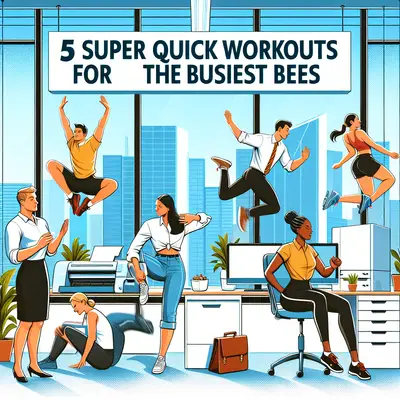
Busy? Perfect. Quick workouts aren’t “plan B” fitness anymore—they’re one of the most efficient ways to boost strength, energy, and mood without wrecking your schedule. The trick is picking moves that work hard for you in just a few focused minutes.
Let’s lock in five fast, no-excuse fitness tips you can slide into any packed day.
Why Quick Workouts Actually Work
Short does not mean weak. Research shows you can improve cardio fitness, strength, and even metabolic health with well-designed, high-effort bursts.
When you go hard (but smart) for a short window, your body:
- Elevates heart rate fast, training your cardiovascular system
- Recruits more muscle fibers with compound moves
- Burns calories during and after exercise (hello, excess post-exercise oxygen consumption)
- Boosts focus and mood thanks to endorphins and increased blood flow to the brain
For busy people, the real win is consistency: five minutes daily beats 45 minutes once a week. The smaller the barrier, the more likely you’ll actually do it—and keep doing it.
Tip 1: The “90-Second Blast” Between Tasks
Turn dead time into power time.
How to do it:
- Pick one move: squats, pushups (wall or floor), mountain climbers, or marching high knees.
- Set a 90-second timer.
- Go at a steady, challenging pace you can maintain.
- Rest 30–60 seconds, then move on with your day.
When to use it:
- While your coffee brews
- Before a video meeting
- While a file downloads or updates
Those little 90-second hits add up quickly—do three in a day and you’ve stacked nearly 5 minutes of solid work without any “gym time.”
Tip 2: The “3-Move Power Circuit” for Micro Breaks
If you’ve got 4–5 minutes, this mini-circuit hits strength, cardio, and mobility in one shot.
Try this quick combo:
Bodyweight Squats – 30 seconds
Incline Pushups (desk, counter, or wall) – 30 seconds
Fast March or Jog in Place – 30 seconds
Rest 30–60 seconds, repeat 2–3 times if time allows.
Why it works:
- Squats hit legs and glutes (big calorie burners)
- Pushups train chest, shoulders, and arms
- March/jog boosts heart rate and blood flow
No mat, no change of clothes, no equipment. Just you and a timer.
Tip 3: Turn Waiting Time Into “Walk Time”
Walking is criminally underrated. It boosts mood, helps manage blood sugar, and protects long-term heart health—and it’s the easiest thing to slide into a wild schedule.
Make walking automatic:
- Phone calls = walk time: pace indoors or loop the block
- Early for an appointment? Walk the hallway or parking lot
- Public transit: get off one stop early and walk the rest
Stacking several 5-minute walks can deliver the same—or better—benefits as one long slog, especially if it means you actually do it most days.
Tip 4: Use “Anchor Habits” for Instant Mini-Workouts
Anchor habits tie a tiny workout to something you already do—so you never have to “remember” to exercise.
Example anchors:
- After brushing your teeth → 15 bodyweight squats
- After your first coffee → 20 countertop pushups
- After closing your laptop for the day → 30-second plank
Keep the moves simple and repeatable. Same trigger, same move, every day.
Over time, these anchors become automatic—like your body’s built-in “move now” button.
Tip 5: Go All-In for a 5-Minute Finisher
When your day is chaos and your workout plans crash, a 5-minute finisher can be your full workout—no guilt, just intensity.
Sample 5-minute finisher (no equipment):
- 40 sec: Jumping jacks (or low-impact side steps)
- 20 sec: Rest
- 40 sec: Squats
- 20 sec: Rest
- 40 sec: Shoulder taps in plank (or hands on a desk)
- 20 sec: Rest
- 40 sec: Fast march or jog in place
- 20 sec: Rest
- 40 sec: Glute bridges (on floor or elevated hips against a chair)
- 20 sec: Rest
Adjust the pace to your fitness level—“challenging, not crushing” is the goal.
Conclusion
You don’t need a 60-minute block, a perfect schedule, or a full gym to get fitter—you just need repeatable, tiny windows of effort.
- 90-second blasts between tasks
- 3-move circuits in micro breaks
- Walking whenever you’re waiting
- Anchor habits tied to daily routines
- 5-minute finishers when plans fall apart
Stack those small wins, and you’re not “fitting in” fitness—you’re living it, one quick move at a time.
Sources
- American Heart Association – Recommendations for Physical Activity – Guidelines on how much activity adults need and how short bouts can add up
- Harvard Health – The secret to better health: Exercise – Overview of the health benefits of regular physical activity
- Mayo Clinic – Interval training: Fitness for busy people – Explains how short bursts of effort can deliver big fitness benefits
- CDC – How Much Physical Activity Do Adults Need? – Official recommendations and emphasis on bouts of activity adding up
- NIH – Benefits of Exercise – Research-based summary of exercise impacts on physical and mental health
Key Takeaway
The most important thing to remember from this article is that this information can change how you think about Quick Workouts.