You don’t need a perfect schedule, matching gym set, or 60-minute routine to get fit—you just need smart moves that fit inside your real life. These quick, punchy tips are built for people who are already juggling 47 things and still want to feel stronger, sharper, and more energized.
Why Quick Workouts Actually Work
Quick workouts aren’t “diet” versions of real exercise—they count. Short bursts of movement can improve cardiovascular fitness, boost mood, and help with long-term health, especially when they’re done consistently.
Research on high-intensity and “exercise snacks” shows that even a few minutes of effort can improve aerobic capacity and metabolic health when repeated throughout the week. That means 5–15 minutes truly has impact, especially if you move with intention instead of just going through the motions.
The key is intensity and consistency: move with purpose, breathe a little harder, and repeat these short sessions most days. Over time, those tiny pockets of effort stack up into real strength, stamina, and confidence. No all-or-nothing thinking, no waiting for “the perfect day” to start.
Tip 1: Turn Waiting Time Into Movement Time
Anytime you’re stuck waiting, your body has a free opening for movement—no sports bra or gym shoes required.
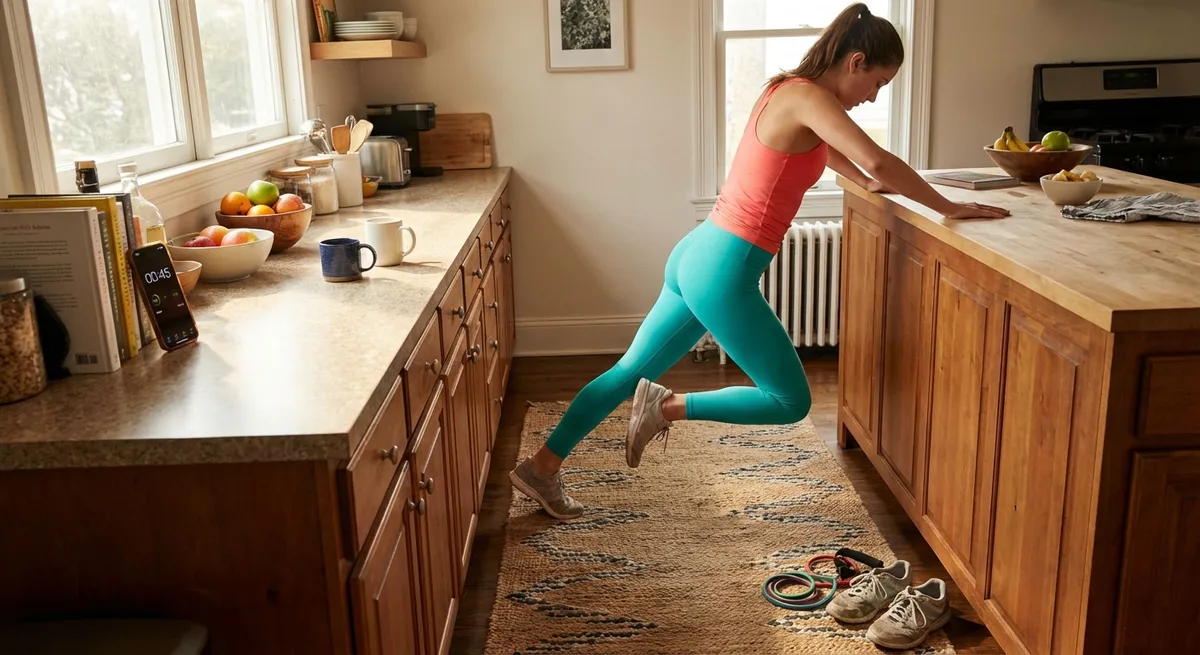
Waiting for your coffee to brew? Do wall pushups or countertop incline pushups. On hold on a call? March in place, add high knees, or do calf raises. Watching a video load? Do slow, controlled bodyweight squats while you wait.
These mini-moves keep your joints happy, wake up sleepy muscles, and gently spike your heart rate. The magic isn’t in a single “perfect” burst—it’s in catching these tiny windows all day long. Think of it as stealing back time your day already wasted.
Tip 2: Use a 5-Minute “All-In” Power Circuit
When your day explodes and you only have a sliver of time, go all in for 5 focused minutes.
Try this simple no-equipment circuit:
- 30 seconds bodyweight squats
- 30 seconds pushups (wall, incline, or floor)
- 30 seconds glute bridges (on the floor)
- 30 seconds fast marching in place
- 30 seconds plank (on hands or forearms)
Rest 30–60 seconds, then repeat once or twice if you have time. If not, one round is still a win.
This combo hits legs, glutes, chest, core, and gets your heart rate up fast. Five minutes isn’t “less than”—it’s a targeted micro-blast that builds strength and endurance over time.
Tip 3: Make Your Commute Work For You
You don’t have to add more time to your day if you can sneak movement into your commute or errands.
If it’s safe and feasible, walk part of your route: get off transit one stop early, park further away on purpose, or take the long way around the block. If you’re remote, “fake a commute” by walking around your building or neighborhood before you start work or after you clock out.
Walking briskly—even in short spurts—improves cardiovascular health, supports weight management, and boosts mental clarity. Turning commute minutes into movement minutes means your workout is done before your day even officially begins.
Tip 4: Attach Movement to a Daily Non-Negotiable
The fastest way to stay consistent: link quick workouts to something you already do every day.
Right after you:
- Brush your teeth, do a 1-minute wall sit.
- Start the shower, do 15–20 squats.
- Close your laptop for lunch, do a 2-minute walk + 30 seconds of stairs.
- Turn on the TV at night, do 10 pushups (any variation) before you sit.
You’re not inventing new time—you’re piggybacking off existing habits. Over weeks, this pairing makes movement automatic. You don’t have to “feel motivated”; it’s just what you do right after the thing you already do.
Tip 5: Go Hard, But Keep It Short
When time is tight, brief higher-intensity effort can deliver serious benefits—as long as you listen to your body and stay safe.
Try a simple interval structure:
- 20 seconds of fast effort (like fast marching, step-ups, or brisk stair climbs)
- 40 seconds of easy movement (slow walk or gentle marching)
Repeat for 5–10 minutes. Adjust intensity so you’re breathing noticeably harder during the “fast” part but can still talk in short phrases. If you’re new to exercise or have health conditions, start with gentler intervals and build up.
These short energy spikes improve cardio fitness and can help regulate blood sugar and mood. Your body doesn’t care if it’s a fancy gym session or a fast hallway walk—it just responds to the signal: “We’re moving.”
Conclusion
You don’t need a different life to get fitter—you just need to treat movement like a daily essential, not a luxury. Steal from your waiting time, stack quick circuits, sneak fitness into your commute, attach movement to habits, and sprinkle in short bursts of intensity.
Tiny, consistent actions outlift “perfect someday” plans every time. Your schedule is busy; your workouts just need to be smarter, not longer.
Sources
- Centers for Disease Control and Prevention – Physical Activity Basics - Overview of recommended activity levels and why smaller bouts of movement matter
- Harvard T.H. Chan School of Public Health – Physical Activity and Health - Explains health benefits of regular activity, including walking and short sessions
- American Heart Association – How to Get the Most from Your Exercise Time - Discusses intensity, intervals, and efficient workouts
- NIH – Benefits of Exercise “Snacks” - Research article on short bouts of activity and their impact on cardio-metabolic health
- Mayo Clinic – Interval Training for a Stronger Heart - Covers how short bursts of higher-intensity activity can improve cardiovascular fitness
Key Takeaway
The most important thing to remember from this article is that this information can change how you think about Quick Workouts.