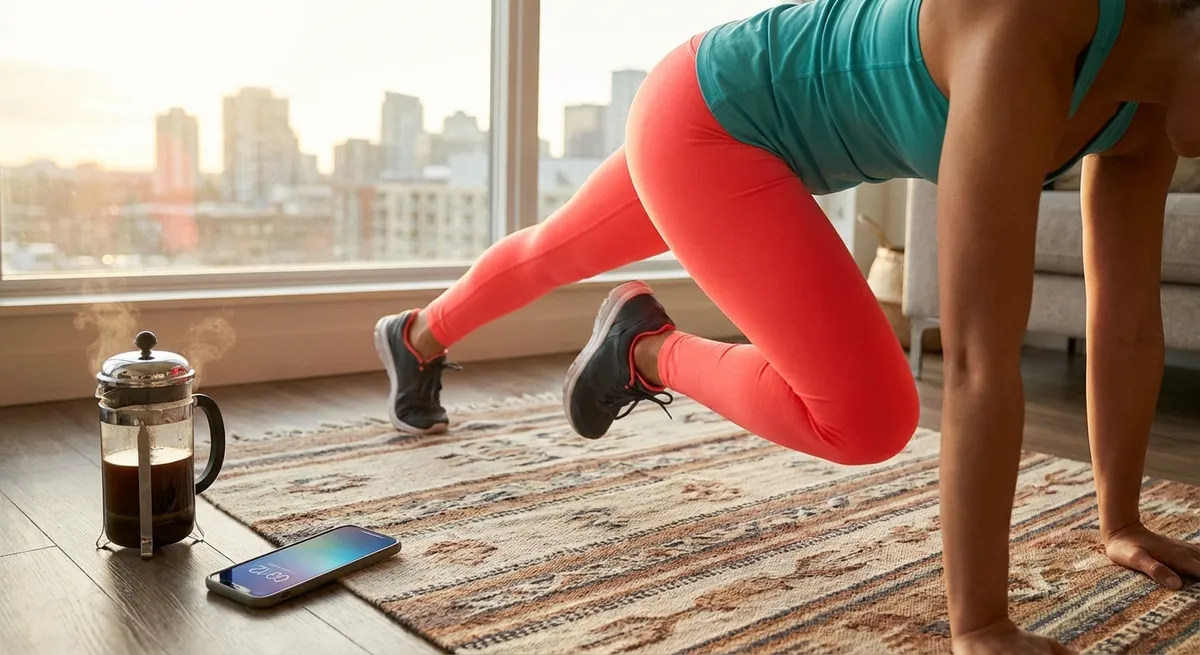
You don’t need a color‑coded schedule or a two‑hour gym block to get fitter. You just need smart, tiny upgrades that slide into the day you already have. Think of this as your “no-friction” fitness plan: fast moves, zero drama, real results.
Why Tiny Time Slots Still Count (A Lot)
Exercise doesn’t have to be one long, perfect workout to matter. Research shows that movement “snacks” spread across your day can still improve heart health, energy, and mood, especially if they get your heart rate up.
Short bursts are easier to start (and easier to stick to) because they don’t require changing clothes, driving to the gym, or rearranging your life. They also fit naturally into transition moments—between emails, after meetings, before a shower—so you’re not “finding time,” you’re upgrading time you already spend.
Think of each short effort as a deposit in your fitness bank. Alone, they’re tiny. Together, they compound into better stamina, strength, and focus.
Tip 1: Turn Waiting Time Into Power Moves
Waiting for coffee to brew, food to heat, or a Zoom call to start? That’s free workout space.
Pick one simple move and do it every time you’re stuck waiting:
- Counter pushups while the kettle boils
- Air squats while the microwave counts down
- Calf raises while your computer reboots
Keep the bar ridiculously low: 30–60 seconds only. You’re not “working out”; you’re just not standing still. Over a day, those micro bursts can easily add up to 5–10 minutes of extra movement.
Tip 2: Attach Movement to a Daily Habit
Habit stacking = less willpower, more consistency. Take something you already do and bolt a tiny fitness win onto it.
Examples:
- After brushing your teeth: 30 seconds of wall sit
- After every bathroom break: 10 bodyweight squats
- After you park the car: brisk walk from the farthest safe spot
The goal is automatic, not intense. Same habit, same time, same move. Before long, your brain links them and your “I’ll skip it” window shrinks.
Tip 3: Use Meetings as Silent Cardio Boosters
You can upgrade your workday without anyone knowing you’re secretly training.
During calls where you’re mostly listening:
- March in place or pace the room
- Do heel raises or mini squats off camera
- Stand instead of sit for at least half the call
If it’s a camera‑on meeting, set a rule: stand for the first 5 minutes, sit for the rest. Even that small change ups your daily movement and counters long sitting time.
Tip 4: Make Screens Earn Your Scroll
Instead of battling your phone time, make it pay rent in pushups.
Before you:
- Open social media
- Hit “Next episode”
- Start a YouTube deep dive
- 10–20 jumping jacks
- 10 slow bodyweight squats
- 20-second plank
Do a quick “entry fee”:
You’re not cutting out screen time; you’re pairing it with a fast, sharp hit of movement that wakes you up and nudges your daily activity higher.
Tip 5: End the Day With a 3-Minute Reset
If “night workouts” feel impossible, aim for a 3‑minute finish line ritual instead. This helps you unwind, sleep better, and sneak in one last health win.
Try a simple flow:
- 1 minute: gentle marching in place or easy walking
- 1 minute: light stretching for hips and chest
- 1 minute: slow breathing, in for 4, out for 6
Think of it as shutting down “work mode” and prepping your body for recovery. Better recovery = more energy tomorrow, which makes every other fitness choice easier.
Conclusion
You don’t need more time—you need smarter moments. Waiting minutes, scroll breaks, meetings, and nightly wind-downs are already in your day. Turn a few of them into mini movement boosts and your fitness starts growing quietly in the background.
Keep it light, keep it fast, and keep it doable. Consistency beats intensity—especially when you’re busy.
Sources
- Physical Activity Guidelines for Americans - U.S. Department of Health and Human Services overview of recommended activity levels and how short bouts of movement contribute to overall health.
- High-Intensity Incidental Physical Activity and Health - British Journal of Sports Medicine article discussing how brief, intense daily activities can improve cardiovascular fitness.
- Exercise and Mental Health - Harvard Health Publishing explanation of how even short exercise sessions impact mood and stress.
- Breaking Up Prolonged Sitting to Improve Health - CDC resources on reducing sedentary time and using short activity breaks throughout the day.
Key Takeaway
The most important thing to remember from this article is that this information can change how you think about Time Savers.