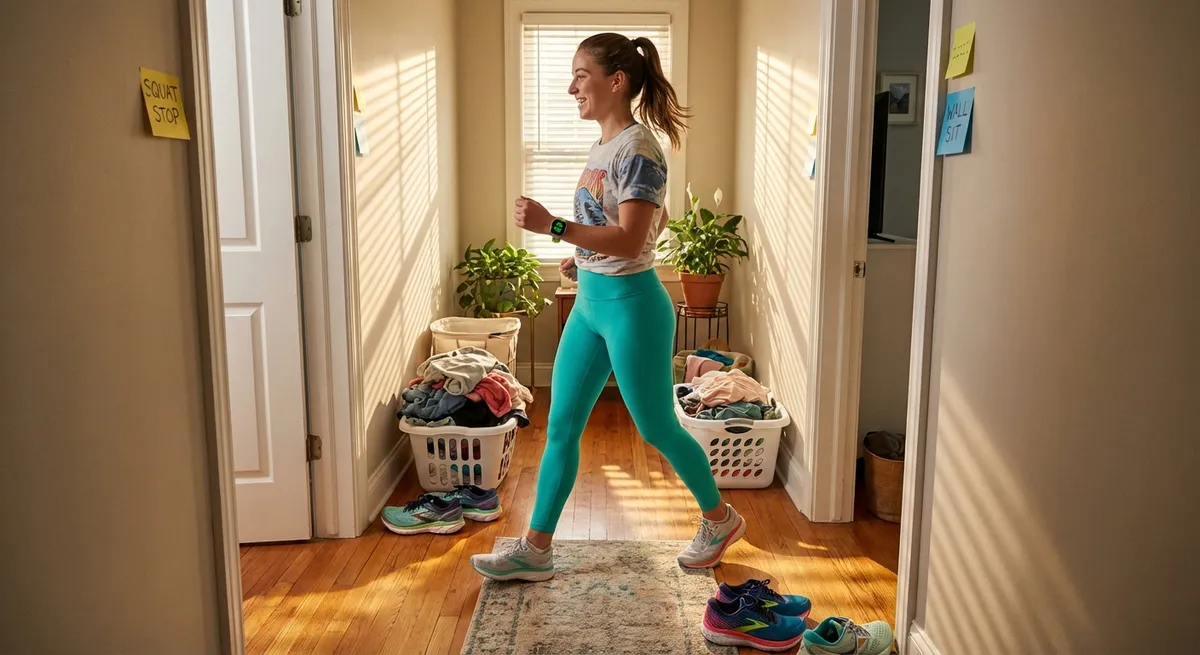
Being busy doesn’t cancel your fitness goals—it just changes the game plan. You don’t need a full hour, a fancy routine, or perfect conditions. You just need tiny pockets of time and a few go-to moves you can drop into your day like quick power-ups. These five speed-friendly tips are designed to slip between emails, meetings, chores, and scroll breaks—no drama, just movement that actually counts.
Tip 1: Turn Transitions Into Mini Workouts
Every time you switch tasks, you’ve got a built-in reset moment. Use it.
Before you open a new tab, join a meeting, start cooking, or check your messages, stack on a micro-move: 10 bodyweight squats, 10 countertop push-ups, or 20 marching-in-place steps. Those tiny “transition bursts” add up shockingly fast across a full day, especially if you pair one move with each recurring task (like squats before every video call or calf raises while waiting for the microwave). The goal isn’t intensity—it’s consistency. Think of transitions as mini bookmarks of movement that keep your body “logged in” even when your schedule is packed.
Tip 2: Use a Single “Anchor Habit” to Lock in Movement
Instead of trying to overhaul your day, attach one small fitness move to something you already never skip.
Pick a daily anchor: brushing your teeth, brewing coffee, waiting for your ride, or powering up your laptop. Then bolt one simple move to that anchor—like a 30-second wall sit while your coffee drips, or 15 slow glute squeezes while you brush your teeth. Because the anchor is automatic, your move becomes almost automatic too. Over time, you can level it up: longer wall sits, more reps, or swapping in a new move when the old one feels easy. One strong anchor habit can be more powerful than five random workouts you never start.
Tip 3: Go “Movement First” for the First 3 Minutes of Your Break
When a break hits, screens love to jump in first. Don’t let them.
For the first three minutes of any break, move your body before you touch your phone, TV, or laptop. Walk a quick loop around your home or office, climb stairs, do light stretching, or cycle through 5–10 reps of your favorite full-body exercises (like lunges, push-ups, and hip bridges). Three minutes is short enough to feel doable, even when you’re tired, but long enough to boost circulation, wake up stiff joints, and reset your brain. After those three minutes, do whatever you want—but you’ve already banked a win.
Tip 4: Make Waiting Time Work for You
Waiting is hidden workout time in disguise.
Waiting for water to boil, updates to download, laundry to finish, or a meeting to start? Move. Try heel raises while you stand, side-leg lifts while you hold onto the counter, gentle torso twists in your chair, or slow controlled standing marches. If you have privacy, hold a plank or do slow mountain climbers during longer waits. Instead of seeing waiting as dead time, treat it like your bonus round. You haven’t added anything to your schedule—you’ve just repurposed blank time into active time.
Tip 5: Choose a “Daily Move Theme” to Avoid Decision Fatigue
The fastest way to do nothing is to keep asking, “What workout should I do?”
Remove the decision. Pick a simple daily theme so you know exactly what your movement focus is the moment you wake up. For example: Monday = legs (squats, lunges, step-ups), Tuesday = upper body (push-ups, triceps dips, wall presses), Wednesday = core (planks, dead bugs, bird-dogs), Thursday = cardio bursts (fast walking, stair sprints, marching), Friday = mobility (stretches and easy flows). You don’t need a perfect plan—just a direction. Then drop 2–3 short bursts related to that theme across your day, wherever they fit.
Conclusion
You don’t need more time; you need smarter touchpoints with movement. Turn transitions into reps, tie one move to a daily habit, move first on every break, use waiting as your secret workout slot, and let daily themes kill the “what should I do?” question. When your life is busy, fitness doesn’t have to be big—it just has to be repeatable. Steal the moments you already have and let them work for your body, one quick FitBittz move at a time.
Sources
- Physical Activity Guidelines for Americans, 2nd edition (HHS) - Official recommendations on how much weekly activity supports health, including benefits of short bouts.
- World Health Organization – Physical activity - Overview of why regular movement matters and how even modest increases improve health outcomes.
- Harvard Health – The secret to better health: Exercise - Explains health benefits of regular activity and emphasizes that small, accumulated efforts count.
- Mayo Clinic – How to fit more fitness into your day - Practical ideas for integrating movement into a busy schedule.
Key Takeaway
The most important thing to remember from this article is that this information can change how you think about Fitness Tips.