You don’t need a 60‑minute gym block to feel strong, awake, and in control of your day. You just need a plan that fits into the cracks of your schedule—not the other way around. These quick-hit tactics are built for busy people who want real results without rearranging their entire life.
Why Quick Workouts Actually Work
Short bursts of movement can deliver serious benefits when you do them with intention and consistency. High-effort intervals and focused bodyweight moves challenge your muscles and heart fast, pushing you into that “this counts” zone, even if you only have five to ten minutes.
Physiologically, the key is intensity, not duration. When you move harder for short windows—think brisk stair climbs, fast-paced squats, or power walks—you elevate your heart rate, recruit more muscle fibers, and spark adaptations in strength, endurance, and insulin sensitivity. Research on high-intensity interval training (HIIT) and accumulated activity shows that splitting movement into smaller chunks across the day can rival one longer workout for health outcomes.
For busy professionals, parents, students, and anyone juggling a packed schedule, this is your cheat code: you don’t need perfection; you need repeatable, bite-sized wins. The goal is to stack tiny efforts that you can actually stick with—because consistency beats the occasional “perfect” workout every time.
Tip 1: Turn Transitions Into 3-Minute Power Blocks
Those in-between moments—waiting for coffee, between meetings, before a shower—are prime real estate. Instead of scrolling, use them as mini power blocks.
Pick one simple move per block:
- 3 minutes of fast bodyweight squats
- 3 minutes of alternating reverse lunges
- 3 minutes of incline push-ups against a counter or desk
- 3 minutes of glute bridges next to your bed
Set a timer, move with purpose, and treat those three minutes like they matter—because they do. Just two or three of these blocks scattered through your day can add up to a solid “stealth workout” without ever changing into gym clothes. Keep the barrier low, the intensity moderate-to-strong, and the habit will actually stick.
Tip 2: The 5×5 Desk Circuit for Workdays
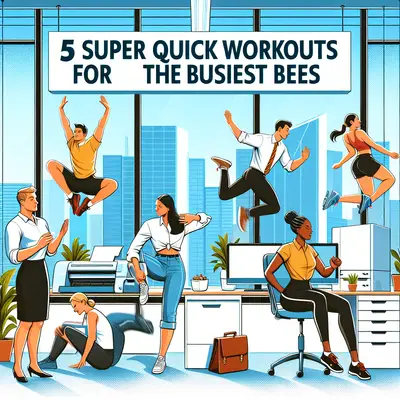
Your desk doesn’t have to be a statue base. Use it as a training station with this five-move, five-minute loop you can repeat 1–3 times a day.
Perform each for 45 seconds, rest 15 seconds, then move on:
- Chair Squats – Stand up and sit back down under control, light touch, then up again.
- Desk Incline Push-Ups – Hands on desk edge, body straight, lower chest toward desk.
- Seated Knee Drives – Sit tall and quickly lift one knee, then the other, as if marching in place.
- Standing Calf Raises – Hold the desk for balance and lift your heels as high as you can.
- Wall Plank Hold – Forearms on a wall, walk feet back and hold a tight plank.
This circuit sneaks in strength work for legs, chest, core, and calves plus a bit of cardio. It’s quiet, office-friendly, and practical in regular clothes. The trick: schedule it like a non-negotiable meeting—set calendar reminders for, say, 10:30 a.m. and 3:00 p.m.
Tip 3: Upgrade Your Walks With Speed Surges
If walking is already part of your day, you’re one dial twist away from turning it into a quick workout. Intervals are the upgrade.
Try this during a 10-minute walk:
- 1 minute: easy pace
- 30 seconds: fast, purposeful pace (you can still talk, but it’s effortful)
- 30 seconds: easy pace
Repeat the 30s fast / 30s easy pattern for 6–8 minutes, then cool down.
These “speed surges” boost your heart rate, improve cardiovascular fitness, and burn more energy than a constant slow stroll. If you commute on foot, walk the dog, or pace on phone calls, sprinkle these intervals in. All you need is intention and a watch—or just count breaths and streetlights.
Tip 4: Micro-Core Blast Before Bed or After Waking
Core work is perfectly suited to short, focused bursts. A 5-minute floor routine can wake you up or help you wind down, no gym required.
Try this simple sequence:
- 30 seconds: Dead bugs (on your back, opposite arm and leg extend)
- 30 seconds: Glute bridge hold
- 30 seconds: Side plank (right)
- 30 seconds: Side plank (left)
- 30 seconds: Slow mountain climbers (hands under shoulders, knees driving in)
Rest 30–60 seconds and repeat 1–2 times.
This combo hits your deep core, glutes, and stability muscles, which support your posture at a desk and protect your lower back. Tie it to an existing habit—right after brushing your teeth or right before you open your laptop—so it becomes automatic instead of “one more thing to remember.”
Tip 5: Use the “Commercial Break” Rule for Screens
If you have time for streaming, scrolling, or gaming, you have time for movement. Use a simple rule: every time you start a new episode, video, or game round, you do 60–90 seconds of a quick move first.
Options:
- 30 seconds jumping jacks + 30 seconds bodyweight squats
- 60 seconds march-in-place or high knees
- 30 seconds shadowboxing + 30 seconds alternating lunges
This “gateway movement” does two things: it builds a reflex where screens trigger motion, and it adds a surprising number of active minutes across your week. You’re not giving up downtime—you’re just pairing it with something that boosts energy, focus, and mood.
Conclusion
Quick workouts aren’t a consolation prize; they’re a smart strategy for a real life that never fully slows down. When you turn transitions, desk time, walks, mornings, and screen breaks into movement moments, your day becomes one long opportunity to feel stronger and more energized. Start with one tip, lock it in for a week, then layer in another. The magic isn’t in the length of any single session—it’s in how often you show up.
Sources
- Centers for Disease Control and Prevention – Physical Activity Basics – Overview of recommended activity levels and health benefits of regular movement
- Harvard T.H. Chan School of Public Health – Benefits of Exercise – Explains how even moderate amounts of activity improve health markers
- Mayo Clinic – Interval Training for a Stronger Heart – Describes how short bursts of intense activity can enhance cardiovascular fitness
- World Health Organization – Physical Activity Fact Sheet – Global guidelines and evidence on the impact of physical activity on health
- NIH – Short Bouts of Activity and Health Outcomes – Research on how accumulating brief periods of exercise across the day supports health benefits
Key Takeaway
The most important thing to remember from this article is that this information can change how you think about Quick Workouts.