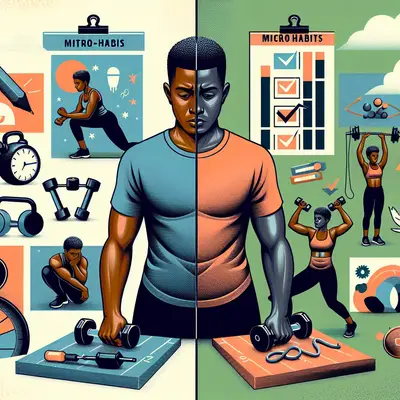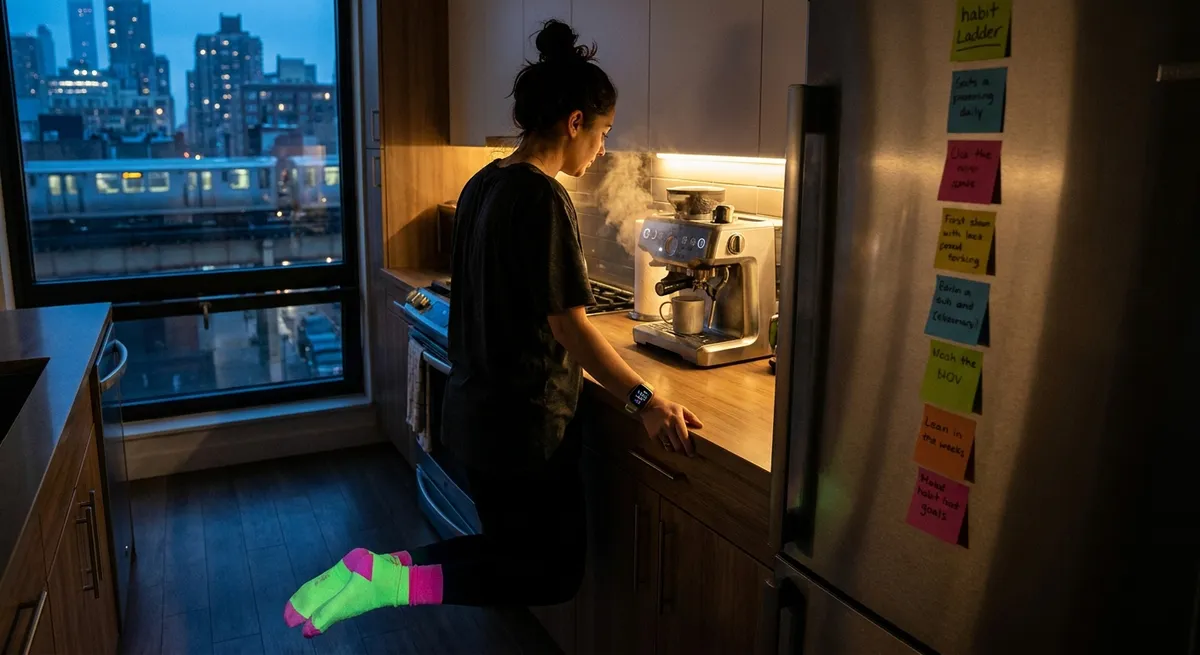
Busy, tired, low on time—but still want to feel stronger, lighter, and more energized? That’s where micro habits come in. Think of them as tiny, almost effortless moves that quietly upgrade your health in the background while you live your life in the foreground.
No full wardrobe change. No hour-long workout block. Just small, repeatable actions that stack up fast.
Why Micro Habits Beat “All or Nothing” Workouts
Big fitness plans sound inspiring—until life throws meetings, kids, emails, and chaos at your schedule. Micro habits flip the script: instead of chasing perfection, you’re chasing consistency.
Micro habits work because they’re:
- So small they’re hard to skip. “30 seconds” feels easy; your brain doesn’t resist it.
- Easy to repeat daily. Repetition wires the behavior into your routine.
- Low friction. No commute to the gym, no special gear, no long warmup.
- Momentum builders. Tiny wins boost motivation and often lead to bigger efforts later.
- Energy-friendly. They fit even when you’re tired or mentally done for the day.
The goal isn’t to “burn out” in one heroic workout. It’s to become the kind of person who moves every day—almost without thinking about it.
Micro Habit 1: The 60-Second Wake-Up Circuit
Before you touch your phone in the morning, give your body a one-minute signal that it’s go time.
Do this as soon as you stand up:
- 10 bodyweight squats
- 10 wall or counter push-ups
- 20 seconds marching in place (drive knees up)
- 20 seconds of light jumping jacks or step jacks (no jump if needed)
Why it works:
- Wakes up your circulation and joints.
- Gently raises your heart rate and body temperature.
- Anchored to a daily event (waking up), so it’s easy to remember.
Keep it non-negotiable and low-pressure. Not a “workout”—just your “morning systems check.”
Micro Habit 2: The Standing Rule for Screens
Every time you start a new video meeting, episode, or YouTube clip, your default move: spend the first 2 minutes standing or moving.
Options:
- Stand and gently march in place
- Do slow calf raises while watching
- Shift into a light split-stance and alternate which leg is forward
- Add slow arm circles to open up your chest and shoulders
Why it works:
- Breaks long sitting spells, which are linked to higher health risks.
- Adds light activity without stealing focus from what you’re watching.
- Over a day with multiple calls or episodes, those “just 2 minutes” stack up quickly.
Bonus: Turn at least one meeting per day into a “camera-off walk and talk” if your job allows it.
Micro Habit 3: The Doorway Strength Check
Use a place you pass through constantly—bedroom door, office door, kitchen entry—as your built-in strength station.
Every time you walk through that specific doorway:
- Do 5–10 wall push-ups or
- Do 5–8 slow squats or
- Hold a 15-second wall sit
Tips:
- Pick one movement per week so it feels automatic.
- Keep the reps low so you never dread it.
- If you’re sore, cut the reps in half instead of skipping.
Over a day, those tiny clusters quietly turn into real volume—without ever feeling like a formal workout.
Micro Habit 4: The Hydration + Movement Pair
Pair something you already do—drinking water—with a tiny movement burst.
Every time you refill your water bottle or grab a drink:
- Do 10 heel raises holding the counter
- Or 10 side leg lifts each leg, holding on for balance
- Or 20 seconds of gentle torso twists to loosen your back
Why it works:
- Hydration breaks become movement breaks, not scroll breaks.
- It nudges you to stand up and reset posture throughout the day.
- You’re already at the sink or fridge—no extra “start-up energy” needed.
To make it stick, put a small sticky note near your water station: “Sip = Move.”
Micro Habit 5: The Bedtime Wind-Down Stretch Trio
Instead of doom-scrolling in bed, run a 3-move, 3-minute stretch sequence that tells your body it’s time to recover.
Right before sleep, on the floor or bed:
- 30–60 seconds seated hamstring stretch (reach toward your toes, soft knees)
- 30–60 seconds figure-four stretch per side (lying on your back, ankle over opposite knee)
- 30–60 seconds gentle child’s pose or knees-to-chest hold
Why it works:
- Loosens hips and back after a day of sitting or standing.
- Helps shift your nervous system toward “rest and digest.”
- Builds a calming ritual that supports better sleep—crucial for recovery and energy.
If 3 minutes feels like a lot at first, start with one stretch and add more over time.
Conclusion
You don’t need an extra hour. You need extra automatic.
Micro habits sneak fitness into the gaps you already have: one minute after waking, two minutes at the start of a call, a handful of reps in a doorway, a quick move with every water refill, three quiet stretches before bed.
Pick one micro habit from this list and run it daily for a week. Then layer in a second. That’s how real, busy-life fitness is built—small, repeatable, and perfectly sized to actually happen.
Sources
- Centers for Disease Control and Prevention – Physical Activity Basics - Overview of why regular movement (even in short bouts) supports health
- World Health Organization – Physical Activity - Explains the health impact of inactivity and benefits of incorporating activity into daily life
- Harvard T.H. Chan School of Public Health – The Importance of Movement - Discusses practical ways to stay active throughout the day
- NHS (UK) – Sitting Too Much - Details the risks of prolonged sitting and the value of regular movement breaks
- Johns Hopkins Medicine – Sleep and Health - Explores how good sleep (supported by wind-down routines) affects recovery and overall health
Key Takeaway
The most important thing to remember from this article is that this information can change how you think about Micro Habits.