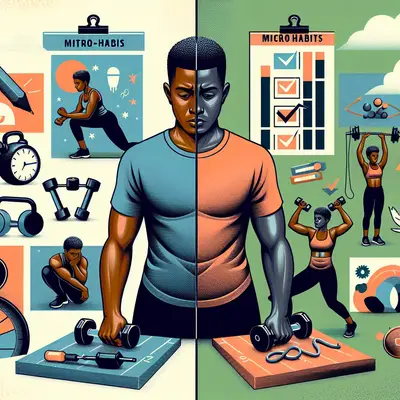
Busy, overbooked, and still want to feel strong and energized? You don’t need a 60-minute workout block—you need a few tiny, repeatable moves that fit inside the life you already have. Micro habits are small, almost too-easy actions that stack up into real fitness wins over time. No drama, no overhaul—just smart shifts that keep your body in gear.
Why Micro Habits Work When Big Plans Don’t
Big fitness plans collapse the second life gets messy; micro habits survive chaos. They’re so small they dodge your brain’s usual resistance—no “I’ll start Monday,” just “I can do this right now.”
Micro habits also piggyback on routines you already do: brushing your teeth, waiting for your coffee, opening your laptop. Every existing routine becomes a hook for a mini-move: a stretch, a hold, a walk, a breath. Over days and weeks, these little bursts add up to more movement, better mobility, and a steadier energy curve—without scheduling a single “official workout.”
The goal isn’t perfection; it’s consistency. Miss one? No spiral. Just catch the next tiny opportunity and keep stacking.
Micro Habit #1: The “Loading Screen Leg Day”
Every time something loads—email, Zoom, a big file—you’ve got a built-in movement window. Use it.
Instead of staring at the spinning wheel, stand up and do:
- 8–12 bodyweight squats
- Or 10–15 standing calf raises
- Or a slow wall sit until the screen finishes (aim for 20–40 seconds)
These micro hits wake up your lower body, bump your heart rate slightly, and remind your brain that “waiting” can still be productive. Do this a few times a day and you’ve quietly sneaked in a mini leg session between tasks without blocking calendar time.
Micro Habit #2: The “Morning Anchor Move”
Pick one simple move and connect it to something you do every morning—no exceptions.
Examples:
- After brushing your teeth → 30-second plank
- After starting the coffee → 15 countertop pushups
- After making your bed → 20 alternating lunges (or 10 each side)
The rule: keep it so small you can’t talk yourself out of it. You’re not aiming for exhaustion; you’re building identity. “I’m the kind of person who moves my body every morning” is a powerful, quiet shift. Over time, you can increase reps or add a second move—but only after the first feels automatic.
Micro Habit #3: The “Walk the Line” Phone Routine
Your phone is a distraction machine, but it can also be a movement trigger. Any time you take a non-work, non-emergency scroll break, pair it with walking.
Options:
- Pace your hallway or office while you check messages
- Walk laps around your kitchen island while on a call
- If you’re outside, do a short “phone loop” around the block before sitting again
Even 3–5 minutes of walking sprinkled through your day can help with blood sugar control and circulation, especially after sitting. You’re hijacking a habit you already have (phone time) and letting your body benefit instead of just your thumbs.
Micro Habit #4: The “Desk Reset Trilogy”
Every 60–90 minutes, hit a 60-second “desk reset” to undo the damage of hunching and sitting. Set a gentle reminder or tie it to a natural break (finishing a task, switching projects).
Try this trilogy:
- 10 shoulder rolls (5 forward, 5 backward)
- 15–20 seconds of chest stretch (hands behind your back or on a doorframe)
- 20–30 seconds of seated or standing spinal twist each side
This mini-mobility break fights stiffness, supports better posture, and can reduce some of the aches that make you not want to work out later. It’s not a workout; it’s maintenance for the body you’re using to get stuff done.
Micro Habit #5: The “Wind-Down Core Check-In”
Even if your day went off the rails, you can still win the last five minutes. Before bed, do a quick floor session—no equipment, no sweatfest.
Try one set of:
- 10–15 glute bridges
- 20–30 seconds dead bug or bird dog
- 20–30 seconds side plank (each side, knees down if needed)
This signals “day is done” to your brain while quietly building core and hip strength—key for back health and daily movement. It’s short enough to do even when you’re tired, and gentle enough not to spike your energy right before sleep.
Conclusion
You don’t need a perfect schedule; you need repeatable micro moves that fit inside the one you’ve got. Attach tiny actions to things you already do, keep the bar low enough to follow through daily, and let consistency—not intensity—do the heavy lifting.
Start with just one of these habits today. Once it feels natural, layer in another. That’s how busy people quietly build strong, energized bodies without rearranging their lives.
Sources
- Centers for Disease Control and Prevention – Physical Activity Basics - Overview of recommended activity levels and health benefits of regular movement
- American Heart Association – Move More, Sit Less - Explains why breaking up sitting time with small bouts of activity matters
- Harvard T.H. Chan School of Public Health – Benefits of Physical Activity - Summarizes research on how consistent activity, even in smaller amounts, supports long-term health
- Mayo Clinic – Exercise: 7 Benefits of Regular Physical Activity - Details broad physical and mental benefits of staying active
- National Institutes of Health – Being Physically Active With a Busy Schedule - Practical strategies for fitting movement into a crowded day
Key Takeaway
The most important thing to remember from this article is that this information can change how you think about Micro Habits.