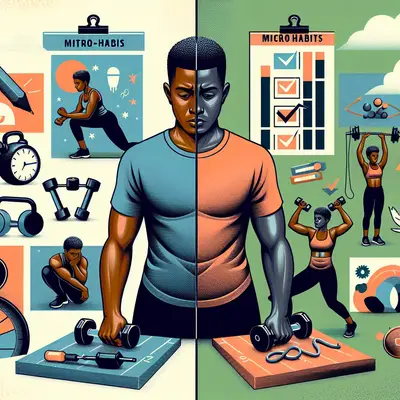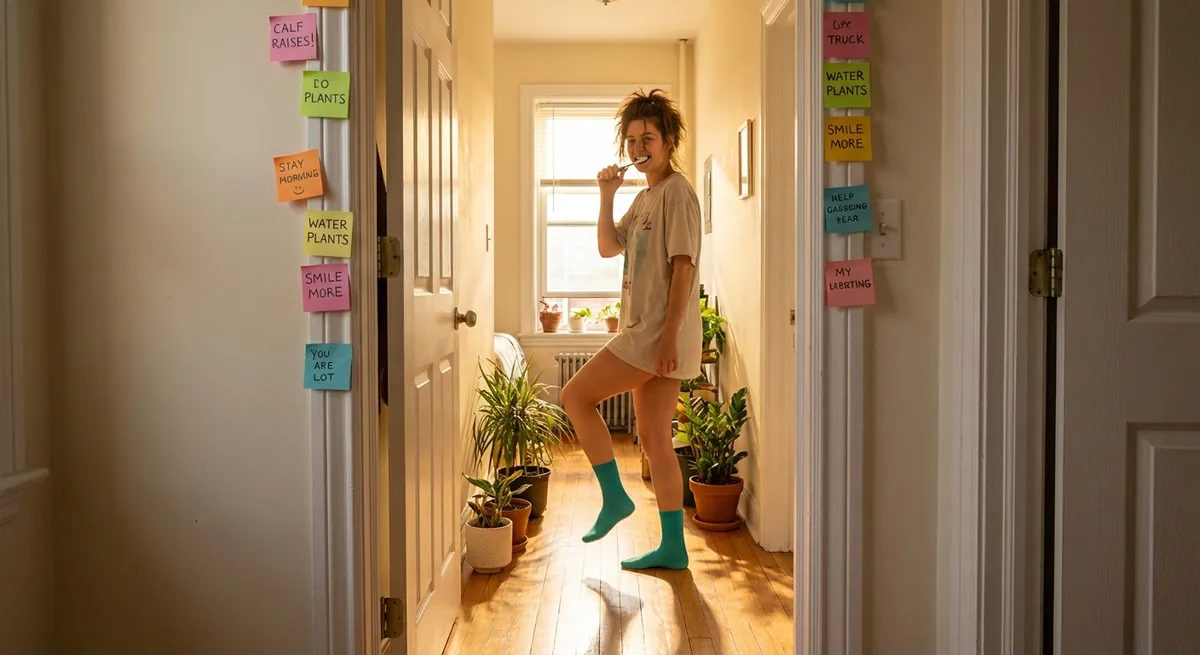
Your fitness doesn’t live only in a 60-minute workout window—and that’s amazing news if your schedule is stacked. Micro habits are super small, almost effortless actions that stack up into real results when you repeat them daily. Think: seconds, not sessions. Let’s turn your everyday routines into low-effort, high-return fitness boosters.
Why Micro Habits Work (Even When You’re Exhausted)
Big changes are tempting… and usually the first to collapse when life gets messy. Micro habits slip under your brain’s “ugh, that’s too much” radar. They’re so small, you almost can’t say no.
Instead of relying on motivation, micro habits piggyback on routines you already do: brushing teeth, checking email, making coffee, scrolling socials. Each tiny action sends a quiet signal to your brain: “I’m someone who moves.” Over time, that identity shift is what keeps you going when willpower is gone.
The magic isn’t in burning huge calories at once—it’s in repetition. A 20-second move, done five times a day, is more powerful than a 60-minute workout you never start. Micro habits also reduce decision fatigue: you don’t need to plan, change clothes, or “get ready.” You just do the thing, right where you are, in the body you’re already in.
Micro Habit #1: The “While It Loads” Move
Every loading bar is a mini workout timer. Waiting for a file to upload, a Zoom room to open, a microwave to beep, or your app to refresh? That’s your cue.
Pick one simple move and link it to “whenever I’m waiting for something to load”:
- March in place
- Stand calf raises (up on toes, slow down)
- Counter pushups
- Bodyweight squats
Keep it tiny: aim for 10–20 reps, not a full set that leaves you gasping. The rule: when the loading bar shows up, your body automatically moves. No negotiation. Do this a few times a day and your “dead time” becomes bonus training without adding anything to your calendar.
Micro Habit #2: The Standing Switch
Sitting all day isn’t just about posture—it slows your metabolism and tightens everything from hips to shoulders. You don’t need a full standing desk setup to fight back. You just need a switch.
Create one simple rule: “First 5 minutes of any call = I’m standing.”
You can:
- Take calls standing or pacing in a small loop
- Put your laptop on a counter or shelf for quick stand sessions
- Use video-off meetings as walk-in-place time
You’re not trying to hit 10,000 steps here. You’re just breaking long sitting streaks. Those short upright bursts wake up your core, glutes, and circulation—and they add up faster than one lonely trip to the gym.
Micro Habit #3: The Doorway Reset
Every time you walk through a certain doorway, you do one tiny move. It’s like a fitness checkpoint built into your environment.
Pick a high-traffic doorway: bedroom, bathroom, kitchen, office. Then assign it a move:
- 3–5 wall pushups
- 10-second dead hang (if you’ve got a pull-up bar)
- 5 slow squats
- 10-second chest stretch against the frame
The trick: keep the number so small it feels almost ridiculous. That’s why you’ll actually do it. Walk through that door 6–10 times a day and you’ve quietly banked dozens of reps without “going to work out.”
Micro Habit #4: The Anchor-Add-On
You already have rock-solid daily anchors: brushing your teeth, making coffee, setting an alarm, washing your face. Attach a 15–30 second move to one of those anchors and it rides on a habit that’s already locked in.
Example pairings:
- After brushing teeth → 20 seconds of plank
- While coffee brews → 15 bodyweight lunges (or just 6 if you’re starting)
- After you shut your laptop at night → 30-second forward fold stretch
- After lunch dishes → 10 standing hip circles per direction
Don’t chase intensity; chase consistency. One strong plank a day is over 350 planks a year. That’s how “no big deal” actions slowly turn into better core strength, balance, and mobility.
Micro Habit #5: The Scroll Swap
You’re already on your phone—make it work for you instead of against your energy. Turn 30–60 seconds of scrolling into a sneaky movement break.
Try this:
- Before you open your social app, do 15 seconds of movement (marches, high knees, or shadow boxing)
- Between every 3–5 stories or posts, put the phone down and do 5 squats or 10 calf raises
- Waiting for a video ad to finish? That’s 10 chair dips or a 20-second stretch
You’re not “giving up” your screen time; you’re piggybacking movement on top of it. That small friction point—“move first, then scroll”—keeps your body in the game without killing your dopamine fun.
Conclusion
You don’t need a perfect routine. You need tiny, repeatable actions that your future self will thank you for. Micro habits turn random spare seconds into movement, without big plans, big effort, or big guilt.
Pick just ONE of the habits above and run it for the next 3 days. No upgrades, no “I’ll do extra tomorrow.” Once it feels automatic, stack on a second one. Momentum beats motivation—especially when each move is small enough to say yes to, even on your worst day.
Sources
- Centers for Disease Control and Prevention – Physical Activity Basics - Explains how any movement, even in short bouts, contributes to health
- Harvard Health Publishing – The secret to better health: Exercise - Overview of why consistent activity, not just long workouts, matters
- American Heart Association – Sit less, move more - Details risks of prolonged sitting and the benefits of frequent movement breaks
- Mayo Clinic – Exercise: 7 benefits of regular physical activity - Covers overall physical and mental benefits of incorporating more activity into daily life
Key Takeaway
The most important thing to remember from this article is that this information can change how you think about Micro Habits.