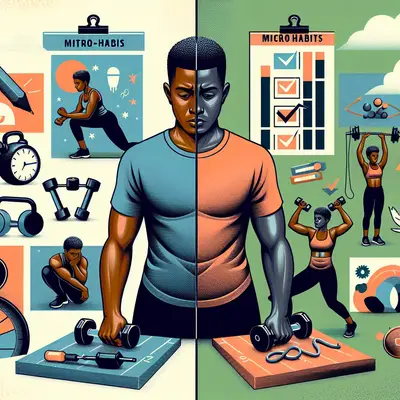
If your schedule is crushed but you still want to feel stronger, clearer, and more energized, micro habits are your secret edge. These are tiny, low-resistance actions that slip into your day without needing extra time, fancy gear, or motivation miracles. Stack a few of them together and your “too busy” life quietly turns into a more active, fitter one.
Why Micro Habits Work When Willpower Fails
Micro habits succeed because they dodge the two biggest fitness killers: overwhelm and decision fatigue. Instead of asking, “Do I have 45 minutes for a full workout?”, you’re asking, “Can I do this one 20-second move right now?” That’s a much easier yes.
These small actions also attach to things you’re already doing—brushing your teeth, making coffee, joining a Zoom call—so you don’t have to “remember to be healthy.” Your current routine becomes the reminder. Over time, these chips of effort stack up into real strength, better mobility, and higher daily calorie burn without a dramatic lifestyle overhaul.
Most important: micro habits reinforce your identity. Each tiny rep is a vote for “I’m someone who moves.” That identity shift makes the next healthy choice feel more natural, not like a constant battle.
Micro Habit #1: The “Kettle Core” While Your Drink Heats
You already wait for something every morning—coffee, tea, microwave, kettle. Turn that dead time into a 60–90 second core wake-up.
While you wait:
- Stand tall, feet hip-width, soften your knees.
- Do 10 slow bodyweight squats.
- Then hold a standing “brace” for 20 seconds: tighten your abs like someone’s about to poke your stomach, keep breathing.
- If there’s still time, add 10 standing calf raises using the counter for balance.
Why it works: You’re using time that was already “wasted,” so it feels free. This quick combo wakes up legs and core, bumps your heart rate, and signals your brain: the day has started, and you’re the kind of person who moves.
Micro Habit #2: The 60-Second “Inbox Reset” Move
Pair movement with something you already open constantly: email, Slack, or texts. Before you reply to anything, do a 60-second move.
Pick one:
- Wall push-ups (light): Hands on the wall, 12–15 reps
- Desk push-ups (medium): Hands on the edge of a sturdy desk, 8–12 reps
- Floor incline plank (hold): Hands on a low surface or floor, hold 30–45 seconds
Set a simple rule: first time you open your inbox each morning and after lunch, you do your chosen move. Non-negotiable, no thinking required.
This micro habit gives you at least 2 strength “snacks” per workday. Over a week, that’s 10+ mini strength sessions without a single “go to the gym” block on your calendar.
Micro Habit #3: The “Stairs-Plus” Upgrade
If you ever see a staircase, you have a built-in workout—no workout clothes required. Instead of just walking up, add a tiny twist.
Pick one upgrade:
- Go one step faster than usual (still safely holding the rail).
- Take every other step if your knees allow it.
- At the top, do 5–8 slow heel raises on the edge of a step to hit your calves and ankles.
- If there’s privacy, do a 15–20 second wall sit on the landing.
You’re not changing your destination—just upgrading the trip. Research shows even short bouts of stair climbing can improve cardiorespiratory fitness and leg strength, especially when done at a higher intensity than your normal walking pace.
Micro Habit #4: The “Screen Scroll Squat Rule”
If you have time to scroll, you have time to squat. Instead of banning your phone (not happening), piggyback movement on it.
Create a simple rule:
- Every time you open a social app, do 5 squats first.
- If you’re seated, do 10 alternating seated knee lifts or 10 seated “marches” instead.
- On the couch? Do 8–10 glute bridges before you hit play on your next episode.
This works because it doesn’t fight your screen time—it attaches to it. You’ll rack up dozens of extra reps a day just by following your own rule. That means stronger legs, better circulation, and less stiffness, while your entertainment habit quietly fuels your fitness habit.
Micro Habit #5: The “Brush & Balance” Stability Check
Toothbrushing time is prime habit real estate: twice a day, every day, already on autopilot. Turn it into a stealth balance and leg-strength session.
While you brush:
- Morning: Stand on one leg for 30 seconds, then switch. Use the sink for light support if needed.
- Evening: Add 10 slow mini-squats after you spit and rinse, keeping your chest lifted and weight in your heels.
Balance work is insanely time-efficient—just a minute or two daily can help reduce fall risk later in life and wake up the small stabilizer muscles around your ankles, knees, and hips. And because you’re brushing anyway, this habit has almost zero friction.
Conclusion
You don’t need a full rebrand of your life to get fitter—you just need a few tiny upgrades to what you’re already doing. Tie movement to your existing routines, keep the moves simple, and focus on consistency over intensity. The magic isn’t in one heroic workout; it’s in hundreds of tiny “I moved anyway” decisions that stack up quietly in your favor.
Pick one of these micro habits and start today. Once that feels automatic, layer in a second. Your schedule doesn’t have to change—but your energy, strength, and confidence absolutely will.
Sources
- Centers for Disease Control and Prevention – Physical Activity Basics - Overview of how even short bouts of activity contribute to health
- Harvard Health Publishing – Why Exercise Snacks Are Good for You - Explains the benefits of very short, frequent movement breaks
- American Heart Association – Recommendations for Physical Activity in Adults - Guidelines showing how small amounts of movement add up
- Mayo Clinic – Fitness: Tips for Staying Motivated - Discusses habit-building strategies and consistency
- National Institutes of Health – Stair Climbing and Health - Research on the cardiovascular benefits of brief stair-climbing bouts
Key Takeaway
The most important thing to remember from this article is that this information can change how you think about Micro Habits.