You don’t need a 60-minute workout to feel stronger, sharper, and more energized. Micro habits—tiny, repeatable actions—can quietly upgrade your fitness without wrecking your schedule. Think of them as fitness “autopilot”: small moves that stack up big over time.
This isn’t about perfection. It’s about sneaking in enough smart movement that your body feels the difference, even on the days your calendar is jammed.
Why Micro Habits Beat All-Or-Nothing Workouts
Micro habits work because they’re too small to skip and too consistent to ignore.
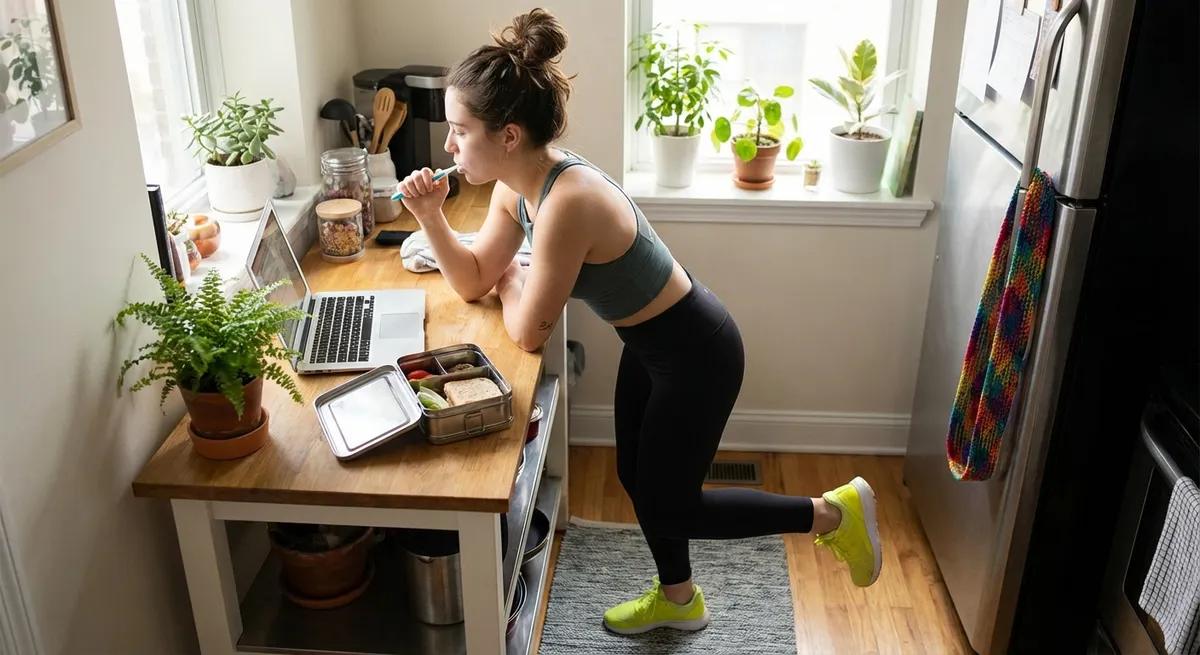
They lower the mental “activation energy” that usually stops you from working out—no gym bag, no commute, no “I need an hour” excuses. Instead, you’re slipping in 30–90 second moves you can do while waiting for coffee, on a call, or before you open your laptop.
Physiologically, short bursts of movement improve blood flow, wake up stiff muscles, and nudge your heart rate just enough to matter. Over the day, these micro-efforts can help with calorie burn, posture, and energy levels. Mentally, each tiny win is a vote for “I’m someone who moves,” which makes the next choice easier.
You’re not chasing sweat-soaked perfection. You’re building a baseline of movement that quietly supports better sleep, focus, and mood—especially when life is hectic.
Micro Habit Game Plan: How To Make It Stick
Before the tips, lock in one core rule: attach every micro habit to something you already do.
That existing thing is your “anchor.” Emails, coffee, bathroom breaks, meetings—those are anchors just waiting to carry a new habit. When you tie tiny moves to anchors, you don’t rely on motivation; your routine does the heavy lifting.
Quick setup guide:
- Pick 1–2 tips from the list below (not all five at once).
- Decide when they happen (e.g., “after I send an email”).
- Keep the bar low: if 10 reps feels like too much, do 3–5.
- Track wins in your notes app or calendar for one week to see the pattern.
Now let’s plug micro fitness into your actual day.
Tip 1: “Inbox Squats” While Your Email Loads
Anytime you’re waiting for your inbox to refresh, a file to upload, or a browser tab to open, drop into bodyweight squats.
How to do it fast:
- Stand tall, feet about shoulder-width apart.
- Sit your hips back like you’re heading for a chair.
- Keep your chest up and knees tracking over your toes.
- Push through your heels to stand.
Aim for 8–12 squats each “wait window.” Hit this a few times a day and you’ve quietly built a decent lower-body session—no gym, no change of clothes, no calendar event.
Anchor idea: “Every time I open my email or refresh my inbox, I do squats until the screen is ready.”
Tip 2: “Call-Time Calf Raises” For Under-the-Radar Strength
On phone calls where you don’t need to be on video, turn standing into strength training with calf raises.
How to do it:
- Stand tall, lightly hold a desk or counter if needed.
- Press up onto the balls of your feet.
- Squeeze your calves at the top.
- Lower slowly with control.
Try 15–20 reps per call, or alternate sets throughout a longer conversation. Calf raises improve lower-leg strength and circulation—huge if you sit long hours or deal with stiff ankles.
Anchor idea: “If I’m on an audio call, I’m also doing at least one set of calf raises.”
Tip 3: “Doorway Stretch Checkpoints” To Fix Desk Posture
Every time you walk through a doorway, use it as a quick posture reset and chest stretch station—especially if screens are rounding your shoulders forward.
How to do it:
- Place forearms or hands on each side of the door frame at about shoulder height.
- Step one foot forward.
- Gently lean your chest through the doorway until you feel a stretch across your chest and front shoulders.
- Hold 15–30 seconds, breathe slowly, then release.
This counteracts hours of hunching, helps your shoulders sit better, and can reduce that tight “desk neck” feeling.
Anchor idea: “When I walk through my office/home office doorway, I take one doorway stretch before I continue.”
Tip 4: “Hydration Push-Up Pairing” For Built-In Strength Bursts
You’re (hopefully) already grabbing water throughout the day. Pair that trip with a quick push-up burst to stack hydration and strength.
How to do it:
- Choose your level: wall push-ups, counter push-ups, knee push-ups, or full floor push-ups.
- Hands a bit wider than shoulders.
- Lower with control, keep your body in a straight line from head to knees/heels.
- Push back up, exhaling as you press.
Start with 5–8 reps each time you refill your bottle, then build from there. Over a day, this can easily become 30–40 push-ups without a formal “workout.”
Anchor idea: “Every time I refill my water bottle, I earn one set of push-ups.”
Tip 5: “60-Second Power Walk Bursts” Between Tasks
Instead of doom-scrolling between tasks, convert transitions into mini power walks.
How to do it:
- Set a 60-second timer.
- Walk briskly around your home, office floor, or even in place.
- Pump your arms, pick up your pace enough to feel slightly breathless but still able to talk.
These short walks can help regulate blood sugar, improve focus, and shake off that heavy, sluggish feeling from long sitting blocks.
Anchor idea: “Before I start a new task or meeting, I take a 60-second power walk.”
Conclusion
Micro habits are your cheat code when life is too full for long workouts. Each tiny move seems almost too small to matter—but stack them up across days and weeks, and you’re building strength, mobility, and energy in the background of your real life.
You don’t need more time. You need smarter anchors and smaller asks.
Pick one tip, attach it to something you already do, and test-drive it for the next seven days. Let your routine do the work—your body will feel the difference.
Sources
- Physical Activity Guidelines for Americans - U.S. Department of Health and Human Services overview of recommended movement levels and health benefits
- Benefits of Physical Activity - CDC breakdown of how even moderate amounts of activity impact health
- Exercise: 7 Benefits of Regular Physical Activity - Mayo Clinic summary of mental and physical benefits of being active
- Breaking Up Prolonged Sitting to Improve Cardiometabolic Risk - Research article on how short activity breaks during sitting improve health markers
- Physical Activity and Your Heart - American Heart Association guidance on how regular movement supports heart health
Key Takeaway
The most important thing to remember from this article is that this information can change how you think about Micro Habits.