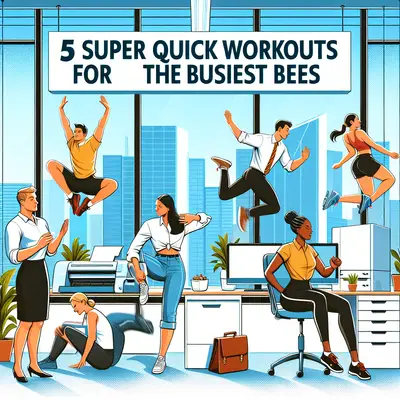
If your schedule is packed but your body is begging for movement, this one’s for you. You don’t need a gym membership, a 60-minute block, or a “perfect routine” to get fitter. You just need tiny pockets of time and smart moves that hit hard, fast. Let’s turn normal moments—emails, coffee breaks, and TV time—into mini power-ups for your body.
Why Quick Bursts of Movement Actually Work
Your body doesn’t care if your workout comes in one long block or several short blasts—it cares about effort over time. Short, focused bursts of movement can boost your heart rate, wake up sleepy muscles, and sharpen your brain in just a few minutes.
These mini sessions improve circulation, help manage blood sugar, and stack up to meaningful calorie burn by the end of the day. Even better, quick workouts are easier to start (and keep doing) because they feel doable instead of overwhelming. Think of them as physical “refresh buttons” that keep your energy from crashing and your body from stiffening up during long stretches of sitting.
When you string these small wins together, your stamina, strength, and mood all climb—without needing to overhaul your entire day. The goal isn’t perfection; it’s repetition. Little bursts. Often. Anywhere.
Tip 1: Turn Every Wait Into a Standing Strength Break
Waiting for your coffee to brew, food to heat up, or a file to download? That’s prime movement time.
Instead of scrolling, stand up and hit a quick strength combo:
- 10 bodyweight squats
- 10 countertop push-ups
- 10 standing calf raises
That’s it—one round takes about a minute. Do a few rounds if you’ve got time. Squats fire up your legs and glutes, push-ups wake up your chest and arms, and calf raises help circulation (especially if you sit a lot). No changing clothes, no equipment, and you finish your “waiting time” feeling more awake instead of drained.
Make it automatic: whenever you’re waiting and can stand, you move. Turn idle time into strength time.
Tip 2: Use Ultra-Short Cardio Bursts to Reset Your Energy
Afternoon slump or focus crash? Hit a 60–90 second cardio burst. The goal is to get slightly breathless, not wrecked.
Pick one move and go:
- Fast marching in place with big arm swings
- Modified jumping jacks (step side to side if impact bothers you)
- Quick high-knee taps to a chair or couch
- Invisible jump rope (small, light hops or just the arm motion if low impact)
Set a timer for 60 seconds, give it your best pace, then stop. You’ll boost heart rate, wake up your brain, and improve blood flow—perfect before a meeting, during a study break, or between tasks. Do two or three bursts spread through the day, and you’ve essentially snuck in a mini cardio workout.
Think of these as espresso shots for your body—short, sharp, and energizing.
Tip 3: Make Screens Your “Move Reminder,” Not Your Time Trap
You’re going to look at screens—let’s hijack that habit. Instead of sinking into the couch completely still, pair screen time with light movement.
Try this during a show, YouTube video, or even a long call:
- During the opening credits or ads: walk laps around the room
- During one scene: hold a wall sit or do gentle standing leg swings
- During another: do 10–15 glute bridges on the floor or couch
You’re still enjoying your content, but your body gets circulation, joint mobility, and light strength work. If you watch a 30-minute show and move during just 3–4 small chunks, you’ll easily rack up 5–10 minutes of low-key activity without sacrificing your chill time.
The rule: if the screen is on for more than a few minutes, something on your body should be moving.
Tip 4: Stack Movement Onto Tasks You Already Do
Instead of forcing new habits into your day, glue movement onto stuff that already happens. This makes it nearly impossible to “forget.”
Examples:
- Every time you brush your teeth: do heel raises or mini squats
- Before every shower: 10 slow, controlled lunges (or reverse lunges for balance)
- After every bathroom break: 10 countertop push-ups or 20–30 seconds of brisk hallway walking
- Before opening your laptop: 20 seconds of arm circles and neck rolls
These tiny, repeatable add-ons build “movement anchors” into your day. You don’t need motivation; the task itself becomes your reminder. Over time, these small bursts improve endurance and mobility more than you’d think—because you do them consistently, not perfectly.
Tip 5: Keep a 3-Minute “Anytime Routine” in Your Back Pocket
When life feels chaotic, having one go-to micro routine removes decision fatigue. No thinking, no planning, just start.
Here’s a simple 3-minute full-body blast:
- 30 seconds: brisk marching in place
- 30 seconds: bodyweight squats
- 30 seconds: wall push-ups or countertop push-ups
- 30 seconds: alternating reverse lunges or step-backs (hold a chair if needed)
- 30 seconds: standing side bends or torso twists
- 30 seconds: slow deep breathing and shoulder rolls
- Before your morning shower
- Between back-to-back calls
- After closing your laptop at night
That’s it—3 minutes, done. You’ve hit legs, arms, core, and cardio. Use it:
When in doubt or feeling stuck, just say: “Three-minute routine—go.” If you want more, repeat it once. If not, you still got a legit mini workout in.
Conclusion
You don’t need to “find time” for fitness—you need to use the time you already have differently. Waiting, watching, working, scrolling…all of it can double as a mini workout window with the right moves.
Pick one of these tips and start today:
- Wait = strength
- Slump = cardio burst
- Screen = gentle movement
- Daily task = movement anchor
- Overwhelmed = 3-minute routine
Stack these small actions, and your day turns into a quiet training ground for more energy, better mood, and a stronger body—without blowing up your schedule.
Sources
- American Heart Association – Recommendations for Physical Activity - Overview of how much activity adults need and why short bouts still matter
- Centers for Disease Control and Prevention – Physical Activity Basics - Guidelines on activity for adults and benefits of moving more, sitting less
- Harvard Health – The Secret to Better Health: Exercise - Explains health benefits of regular movement, including short sessions
- Mayo Clinic – Exercise: 7 Benefits of Regular Physical Activity - Details how consistent activity improves energy, mood, and overall health
Key Takeaway
The most important thing to remember from this article is that this information can change how you think about Quick Workouts.