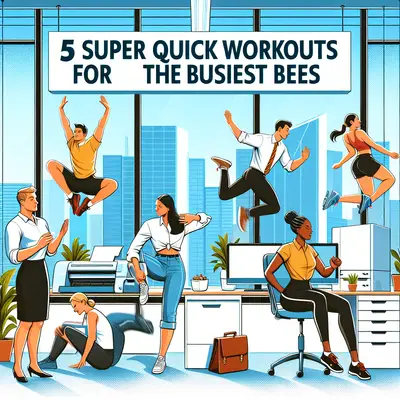
You don’t need a 60-minute gym session to feel strong, clear-headed, and energized. You just need smart, intentional bursts of movement that snap into your real life. These quick workouts won’t hijack your schedule — they’ll slide right between emails, errands, and “I’m-too-tired” moments.
Let’s turn your busiest days into legit fitness wins.
Why Quick Workouts Work (Even When Life Is Chaos)
Short, focused workouts can trigger real fitness gains without demanding massive time blocks. Research shows that brief, higher-intensity bouts can boost cardiovascular health, improve insulin sensitivity, and elevate mood in less total time than traditional workouts.
Quick sessions are also easier to start — and the start is usually the hardest part. When your brain knows the workout will be over in 5–10 minutes, it stops negotiating and just lets you move.
Think of these mini sessions as:
- Energy resets instead of “real workouts”
- On-ramps to consistency instead of all-or-nothing plans
- Tools you can deploy whenever a tiny time window opens up
Now let’s plug that logic into real life with five fast, no-excuses tips.
Tip 1: Turn Waiting Time Into “One Move” Time
Anytime you’re waiting, you’re available for one simple move. Not a full workout — just one move.
Try these:
- While coffee brews: March in place and add 10 bodyweight squats.
- During microwave time: Counter pushups until the timer beeps.
- On hold on a call: Slow calf raises, up and down, no leaning on anything.
- Before your shower: 30 seconds of fast air punches, 30 seconds of light jog in place.
The trick: Don’t overcomplicate it. Pick one move per “waiting zone” and repeat daily. Your body will start associating certain spots (kitchen, bathroom, office printer) with quick action bursts — that’s how habits lock in.
Tip 2: Use the 5-Minute Reset Circuit
When your brain is fried but your day isn’t over, run a 5-minute reset. No equipment. No warm-up. Just go gentle-to-moderate intensity and focus on good form.
Try this 5-minute circuit:
Bodyweight squats – 40 seconds, 20 seconds rest
Sit back into your heels, chest up, slow and controlled.
Incline pushups on a counter or desk – 40 seconds, 20 seconds rest
Tight core, full range, no rushing.
Standing knee drives – 40 seconds, 20 seconds rest
Drive one knee toward your chest like a slow high-knee march, then switch.
Glute bridges (on a mat or carpet) – 40 seconds, 20 seconds rest
Squeeze glutes at the top, don’t arch your lower back.
Wall sit – 40 seconds, 20 seconds rest
Back flat, knees over ankles, breathe steady.
Done. That’s it. Five minutes. If you feel good, you can always repeat — but the win is locked in after one round.
Tip 3: Anchor Movement to Non-Negotiables
You already do certain things every day: wake up, brush teeth, check messages, make coffee, change clothes. Attach micro-workouts to those anchors so they happen on autopilot.
Examples:
- Right after you wake up: 10–15 slow, deep bodyweight squats beside your bed.
- Before your first email or message: 30–60 seconds of brisk pacing or marching in place.
- While your shower warms up: 20 standing toe taps on the tub edge or step.
- Before changing into pajamas: 30-second plank (front or on your knees).
You’re not relying on motivation — you’re riding routines you already have. Keep the moves simple and repeat the same ones daily so there’s zero mental friction.
Tip 4: Stack Micro Moves Into a “Stealth Workout”
If you can’t find 20 minutes, steal four blocks of 5 minutes and silently “stack” them across your day. By bedtime, you’ve built a full workout without ever blocking your schedule.
Sample stealth stack:
- Morning: 5 minutes of fast walking around your home or office.
- Midday: 5 minutes of alternating lunges and wall pushups.
- Afternoon slump: 5 minutes of stairs (or step-ups on a sturdy step) at a comfortable pace.
- Evening: 5 minutes of light stretching (hamstrings, chest, hips) before screens or sleep.
None of these feel massive on their own. But stacked? That’s 20 minutes of meaningful movement that supports your heart, muscles, and mood.
Tip 5: Use “Intensity Dials” Instead of “All or Nothing”
Busy days change by the hour. Instead of bailing on your workout because you’re tired or stressed, dial the intensity up or down like a volume knob — not a light switch.
Pick a base mini-workout, then adjust:
Base move set (2–3 minutes total):
- 10 squats
- 10 countertop pushups
- 20 seconds of marching in place
- Low dial (exhausted/tight on time): Do it once. Call it your “minimum win.”
- Medium dial (normal busy): Do 2–3 rounds with short breaks.
- High dial (you’ve got a bit more juice): Add speed, or tack on 20–30 seconds of fast stepping or jumping jacks at the end.
Now choose your dial:
Same moves, different output. This protects your consistency — which matters more for real results than occasional heroic workouts.
Conclusion
You don’t need perfect days, fancy gear, or giant time blocks. You need:
- One move when you’re waiting
- One 5-minute reset when you’re fried
- One habit attached to what you already do
- One tiny stack across your day
- One intensity dial that keeps you showing up
That’s how busy people quietly get fitter in the background of real life.
Start with one tip today, not all five. Once that feels easy, layer in another. Your schedule doesn’t have to shrink for your fitness to grow.
Sources
- Centers for Disease Control and Prevention – Physical Activity Basics - Overview of recommended activity levels and benefits of regular movement
- World Health Organization – Physical Activity - Evidence-based guidance on how physical activity improves health
- Harvard Health Publishing – The Truth About Exercise “Snacks” - Explains how short bouts of exercise can support fitness and health
- American Heart Association – Interval Training for a Stronger Heart - Discusses benefits of higher-intensity, shorter-duration workouts
- Mayo Clinic – How to Fit In Fitness When You’re Busy - Practical strategies for adding short exercise bouts into a busy day
Key Takeaway
The most important thing to remember from this article is that this information can change how you think about Quick Workouts.