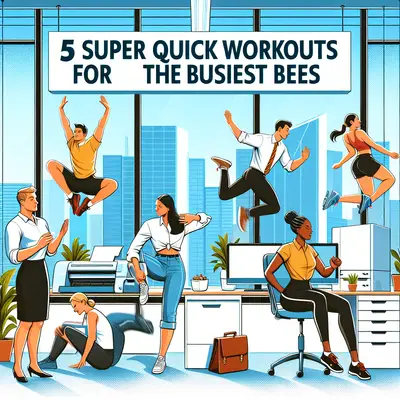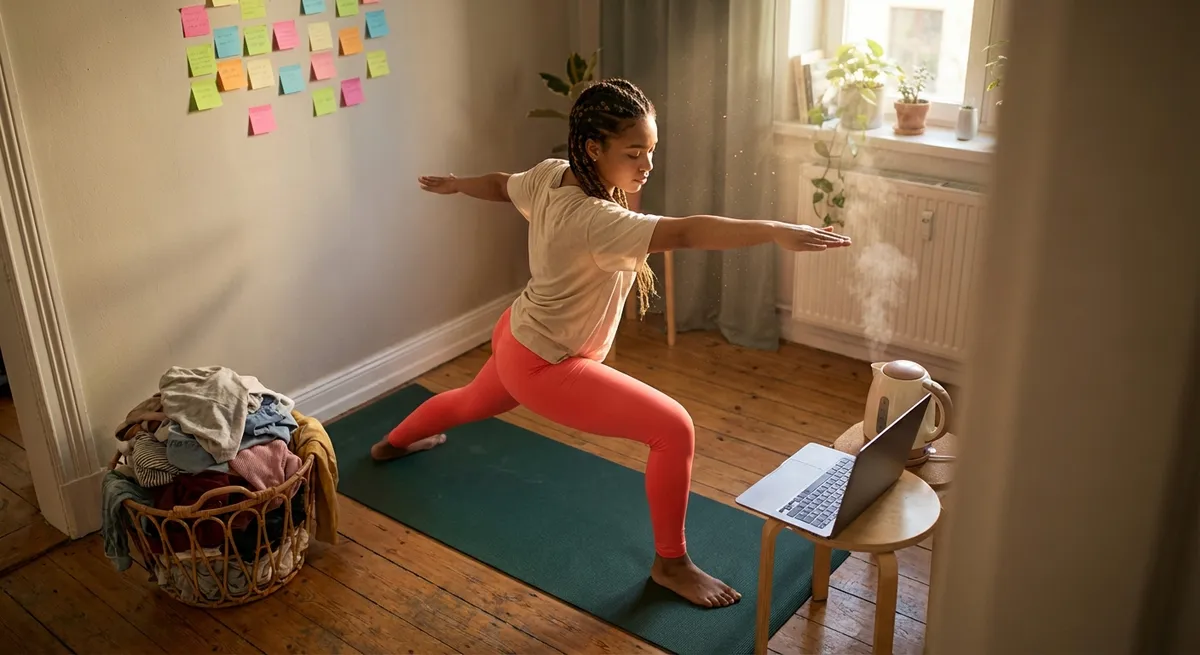
You don’t need a spare hour to feel stronger, steadier, and more awake. You just need a few smart moves that slide into your existing day—between emails, calls, or coffee refills. These quick workouts aren’t about perfection; they’re about momentum. Think: tiny power-ups that keep your body switched on while your schedule stays packed.
Why Quick Workouts Actually Work
Your body doesn’t care if movement shows up in one 45-minute block or in short bursts scattered through the day—it just cares that you move. Research shows that “exercise snacks” (brief, intense bouts of movement) can boost cardiovascular fitness, support blood sugar control, and improve mood without a formal gym session.
Short, focused effort also cuts through decision fatigue. You don’t have to change, drive, or psych yourself up. You just stand, move for 2–5 minutes, and drop back into your day feeling sharper. That lower mental barrier makes you far more likely to actually do it—especially when you’re stacked with meetings and deadlines.
The secret: keep the moves simple, no equipment required, and easy to remember. Once a move feels automatic, your brain stops negotiating, and “I’ll start tomorrow” becomes “I’ll do it right now.”
Tip 1: Turn Every Scroll Break Into a 60-Second Power Set
When your hand reaches for your phone, use that as a trigger for a 60-second burst before you unlock the screen.
Pick one move:
- Bodyweight squats
- Wall push-ups
- Alternating reverse lunges
- Standing calf raises
Set a mental rule: “One minute before I scroll.” That could be 20 squats, 15 wall push-ups, or as many calf raises as you can do with control. The time is so short it feels almost too easy to skip, but it adds up fast—especially if you check your phone a dozen times a day.
To keep joints happy, focus on:
- Smooth, controlled motion (no bouncing at the bottom of a squat)
- Knees tracking in line with toes
- Core lightly braced like you’re zipping up tight jeans
You’re not chasing exhaustion here—just a quick shot of circulation and muscle activation.
Tip 2: Use “Loading Time” as Movement Time
Waiting for coffee to brew, files to download, or a video to buffer? That’s hidden workout gold.
Tie one simple routine to any short wait:
- Counter plank: Hands on the counter, step feet back, hold a strong plank while you wait
- March and squeeze: March in place, driving knees up while squeezing your glutes on each step
- Side leg lifts: Lightly hold the counter and lift one leg out to the side, then switch
These micro-windows are perfect because they’re fixed—you’re there anyway, you can’t do much else, and the time is brief. Instead of mentally checking out, you lock in a few intentional reps and step away feeling more awake.
Consistency hack: Keep the same move for a full week so it becomes automatic, then swap to a different move next week to keep your body guessing.
Tip 3: Stack Movement Onto Meetings Without Being “The Fitness Person”
You don’t have to be squatting on camera to sneak movement into your workday.
On audio-only calls:
- Walk slowly around your space or hallway
- Do gentle heel raises or toe taps under the desk
- Shift into a standing position for at least part of the call
- Take a “stand for the first 5 minutes” rule
- Sit tall, engage your core, and lightly squeeze your glutes for 10-second holds
- During long meetings, use every agenda transition as a cue to roll your shoulders and reset posture
On video calls:
This keeps your body from locking into one shape all day. You’ll feel less stiff at 4 p.m. and more mentally alert, because even low-level movement helps blood flow and focus.
Bonus move for camera-off time:
- 10 chair squats (sit to stand without using your hands)
- 10 seated knee lifts (marching while seated, engaging your core)
Rotate through those whenever you’re listening more than speaking.
Tip 4: Do a 5-Minute “Core & Mobility Reset” Between Tasks
Instead of doom-scrolling between big tasks, drop into a quick reset circuit. Set a 5-minute timer and cycle through:
- 30 seconds: Cat–cow (on hands and knees, gently arch and round your spine)
- 30 seconds: Plank hold (on hands or forearms, knees down if needed)
- 30 seconds: Hip hinge good mornings (hands on hips, push hips back with a flat back, then stand tall)
- 30 seconds: Dead bug (on your back, opposite arm and leg reaching out, core braced)
- 30 seconds: Chest opener (stand tall, clasp hands behind you, gently lift chest)
Repeat the flow as many times as you can in 5 minutes with good form.
This combo hits your core, spine, hips, and shoulders—the areas that suffer most from sitting. You’ll stand up from your desk feeling less creaky and more “put together,” and it’s short enough that it won’t derail your schedule.
Tip 5: Build a “Bedtime Bookend” Mini-Routine
Front-load your morning or back-end your night with a tiny routine so you get at least one guaranteed win every day, no matter how chaotic it gets.
Example bedtime flow (3–6 minutes):
- 10 slow bodyweight squats
- 10 wall push-ups
- 20-second side plank per side (knees down if needed)
- 30–60 seconds of gentle stretching: calves, hamstrings, chest
Keep the intensity moderate in the evening; the goal is circulation and light strength, not a wired nervous system. If you’re a morning person, do a slightly more energizing version: quicker tempo, a few jumping jacks or brisk marches, and more upright stretches.
Because this routine is anchored to something you already do (brushing your teeth, setting your alarm, starting coffee), it becomes part of your identity: “I’m someone who moves daily,” even on your busiest days.
Conclusion
Quick workouts aren’t a backup plan—they’re a legit strategy for staying strong, energized, and clear-headed when life is packed. You’re not waiting for a perfect gap in your calendar; you’re sprinkling movement into the gaps you already have.
Pick one tip from this article, test it for the next 3 days, and keep it ridiculously simple. Once it feels automatic, layer in a second tip. Small moves, repeated often, quietly turn into real fitness.
Sources
- Harvard Health Publishing – The secret to better health: Exercise – Overview of how even modest amounts of regular activity improve health
- American Heart Association – Recommendations for Physical Activity in Adults – Guidelines that support breaking movement into shorter bouts
- NIH – Exercise and Physical Activity: Your Everyday Guide – Explains how to integrate activity into daily routines
- British Journal of Sports Medicine – Vigorous intermittent lifestyle physical activity and mortality – Research on how brief, vigorous activity bursts benefit health
- Mayo Clinic – How much exercise do you really need? – Clarifies exercise dose and the value of accumulating activity over the day
Key Takeaway
The most important thing to remember from this article is that this information can change how you think about Quick Workouts.