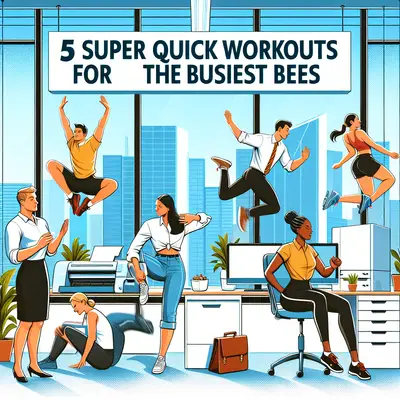
You don’t need a clear calendar or a gym membership to feel strong, awake, and dialed in. You just need a few smart, fast moves that hit hard and fit between the chaos. These quick-burst ideas are built for real life: tight schedules, endless notifications, and zero patience for complicated routines.
Let’s plug in a few rapid-fire fitness wins you can actually stick with.
Tip 1: Turn Transitions Into 60-Second Power Blocks
Those tiny gaps in your day—waiting for your coffee, booting up your laptop, heating leftovers—are pure movement gold.
Instead of scrolling, pick one 60-second move and repeat it every time the same trigger happens. For example, every time you start a Zoom call, do 60 seconds of bodyweight squats beforehand. Waiting for the kettle? March in place with high knees until it boils.
The key is pairing a simple move with a routine moment so you don’t have to think about “when” to work out. Over a day, those 60-second blocks stack into serious effort without ever needing a formal “workout time.” Consistency beats intensity—especially when you’re busy.
Tip 2: Use a 5-Minute “Wake-Up Circuit” Instead of Coffee #2
When your brain feels like it’s buffering, hit a quick full-body circuit that wakes up your muscles and your focus.
Try this simple 5-minute blast:
- 30 seconds: Fast walking in place or marching
- 30 seconds: Push-ups (on the wall, counter, or floor)
- 30 seconds: Squats or sit-to-stand from a chair
- 30 seconds: Standing twists, rotating your torso side to side
- 30 seconds: Light jogging in place or heel raises
Rest 30 seconds, then repeat the whole thing once more.
This mini circuit boosts circulation, delivers more oxygen to your brain, and can sharpen concentration better than yet another caffeine hit. It’s short enough to drop between tasks but powerful enough to change how you feel for the next hour.
Tip 3: Make Your Desk a Secret Workout Zone
Your desk doesn’t have to be a stillness trap. With a few sneaky upgrades, it becomes a quiet training zone.
Every 45–60 minutes, set a quick timer and do one “desk move”:
- Chair sit-to-stands (no hands if you can)
- Seated leg extensions (straighten one leg, hold, switch)
- Desk push-ups (hands on desk, step back, lower chest)
- Seated marches (lift knees high while sitting tall)
You’re not trying to sweat through your clothes; you’re simply keeping your muscles active and your posture from collapsing. These mini moves can help reduce stiffness, support better circulation, and keep your energy from bottoming out during long screen sessions.
Tip 4: Walk With Intent, Not Just Distance
If walking is already in your day, upgrading how you walk is one of the fastest fitness boosts you can grab.
Instead of a slow, mindless stroll, try:
- Walking with a purposeful, brisk pace (you can still talk, but not sing easily)
- Adding “speed segments” between landmarks—walk faster between two streetlights, then recover, and repeat
- Taking the stairs when possible and powering up with shorter steps and strong arm swings
These small intensity shifts can nudge your heart rate higher, improve cardiorespiratory fitness, and burn more energy in the same amount of time. Think of it as turning “I have to walk there” into “I just nailed a stealth workout.”
Tip 5: Use TV Time as Your Built-In Workout Cue
If you’re watching a show, you’ve already carved out time—now let’s make a tiny slice of it work double.
During the first 5 minutes of an episode or a commercial break, stand up and move:
- First minute: March or jog in place
- Second minute: Alternating lunges or step-backs
- Third minute: Wall sit or static squat hold
- Fourth minute: Arm circles and shoulder rolls
- Fifth minute: Gentle stretches for your neck, hips, and hamstrings
You still get your relaxation, but your body doesn’t spend the entire block in “statue mode.” Over a week of watching, that adds up to a lot of high-quality, low-drama movement.
Conclusion
Quick workouts don’t have to be fancy, sweaty marathons, or social-media-worthy routines. They just need to be:
- Short enough to feel doable
- Simple enough to remember
- Repeatable enough to become automatic
Stack a few of these fast moves into your day, and you’ll feel the difference in your focus, energy, and mood—without ever needing to “find time” for fitness. Your schedule stays packed; your body still gets to win.
Sources
- Physical Activity Guidelines for Americans, 2nd edition - U.S. Department of Health and Human Services recommendations on weekly activity and how short bouts of movement contribute to health
- How Much Physical Activity Do Adults Need? - CDC overview of activity intensity, benefits, and practical guidance
- The Benefits of Walking - Harvard Health Publishing breakdown of why walking (and walking faster) improves health
- Workplace Physical Activity - CDC guidance on integrating movement into the workday
- Exercise for Mental Health - Peer-reviewed article on how physical activity supports mood and cognitive function
Key Takeaway
The most important thing to remember from this article is that this information can change how you think about Quick Workouts.