Life is busy. Meetings stack up, notifications never stop, and your “real workout” keeps getting pushed to “tomorrow.” Good news: you don’t need a full hour or a gym to feel strong, awake, and in control of your day. With a few smart micro-sessions, you can flip your energy back on in minutes—no drama, no fancy gear.
This guide gives you five quick, high-impact moves you can drop into your day whenever you’ve got 3–8 spare minutes. Think of them as power buttons for your body.
Why Quick Workouts Actually Work
Short workouts are not a consolation prize—they’re legit. Research shows that even a few minutes of moderate-to-vigorous movement can improve blood flow, boost mood, sharpen focus, and support long-term health when done consistently.
Quick bursts of movement:
- Wake up your nervous system so you feel more alert
- Improve insulin sensitivity and blood sugar control
- Ease stress by lowering muscle tension and boosting endorphins
- Help offset long sitting stretches (hello, desk job life)
You’re not “cheating” by going short—you’re using your time strategically. The key is intensity and consistency: move with purpose, even if it’s only for a few minutes.
Tip 1: The 3-Minute Wake-Up Circuit
Perfect for: Rolling out of bed, mid-afternoon slump, or pre-Zoom boost.
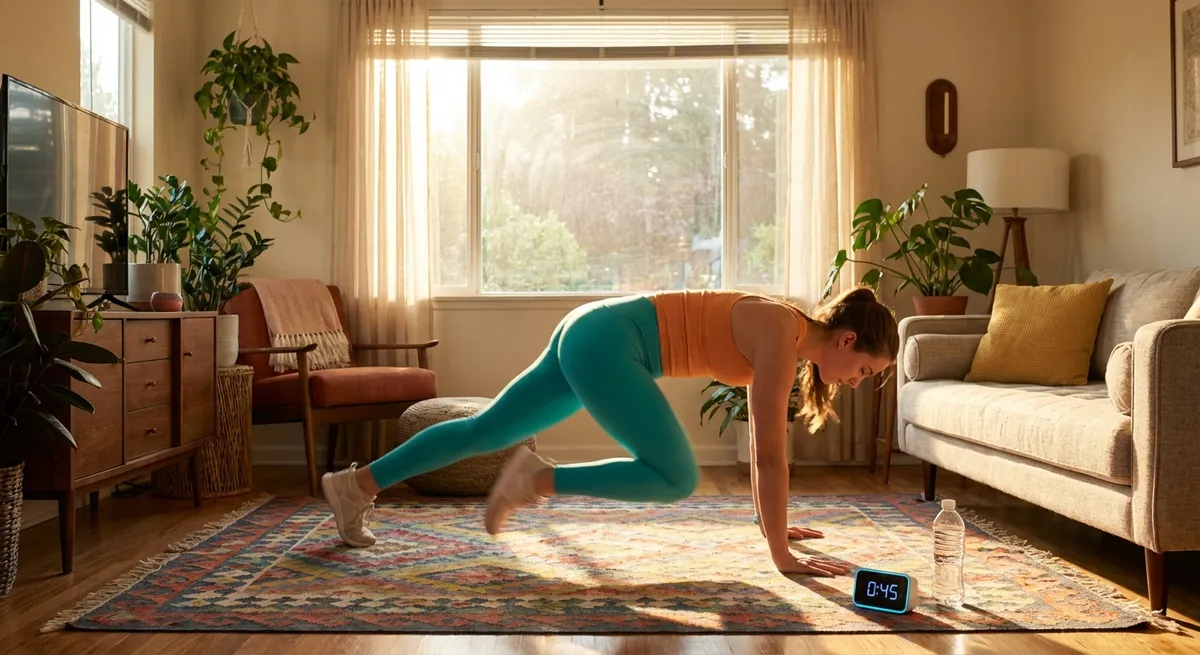
Set a 3-minute timer and cycle through these with zero breaks:
- 30 seconds: Fast marching in place (drive your knees up, swing your arms)
- 30 seconds: Bodyweight squats (sit back like there’s a chair behind you)
- 30 seconds: Wall push-ups (stand arms-length from a wall and press)
- 30 seconds: Alternating reverse lunges (step back, gently drop the back knee)
- 30 seconds: Standing torso twists (hips forward, rotate upper body side to side)
- 30 seconds: Deep breathing with shoulder rolls
If you’ve got 6 minutes, repeat once. This quick burst wakes up your legs, arms, and core, drives your heart rate up, and clears that foggy feeling without needing equipment or a workout outfit.
Tip 2: The “Every Stoplight” Lower-Body Blast
Perfect for: People who spend a lot of time standing, waiting, or commuting (safely, when you’re not driving).
Anytime you’re waiting—microwave, kettle, printer, elevator, or yes, at a safe standstill in your day—turn it into a mini leg session:
- 10–15 calf raises (rise onto your toes, squeeze, lower slowly)
- 10–15 mini squats (tiny range of motion if space is tight)
- 10–15 side leg lifts per leg (hold a wall or counter for balance)
- Build strength in your legs and glutes
- Improve circulation after sitting
- Sneak in volume across the whole day
Repeat until your wait is over. These micro-bursts:
By evening, you can easily rack up 100+ reps without a “formal” workout.
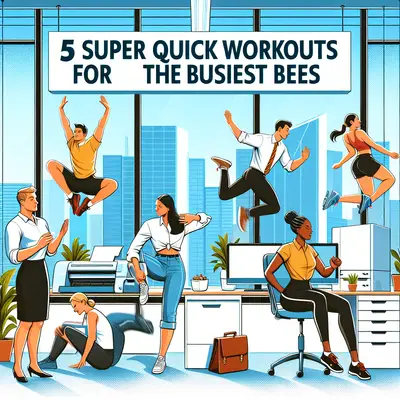
Tip 3: 5-Minute Power Core at Your Desk
Perfect for: Desk workers who want stronger abs and better posture—without getting on the floor.
Try this mini sequence, seated or standing:
- 45 seconds: Seated march with tight core
- Sit tall, brace your abs gently, lift one knee then the other like a slow march.
- 45 seconds: Isometric core brace
- Sit tall, pull your belly button slightly toward your spine, and “lock” your midsection like you’re bracing for a gentle poke. Breathe normally.
- 45 seconds: Seated or standing “wood chops”
- Clasp your hands, start above one shoulder, and rotate diagonally toward the opposite hip. Switch sides at halfway.
- 45 seconds: Glute squeeze
- While seated or standing, squeeze your glutes hard, hold for 3–5 seconds, release. Repeat.
- 60 seconds: Posture reset
- Feet flat, shoulders down and back, chin slightly tucked, imagine a string pulling the top of your head up. Hold and breathe.
One round takes about 5 minutes, and your core and back will feel awake instead of slumped and stiff.
Tip 4: The 7-Minute “Stair Sprint” Session (No Running Required)
Perfect for: Anyone with access to stairs at home, work, or in an apartment building.
Stairs are a built-in cardio + strength machine. Try this:
- 1 minute: Walk up and down at an easy pace
- 1 minute: Climb one step at a time, pumping your arms
- 1 minute: Climb every other step (if safe), walk down normally
- 1 minute: Fast-but-controlled stair walk (no running, just quicker steps)
- 1 minute: Side-step up the stairs (face sideways, step up, bring feet together; switch sides halfway)
- 1 minute: Easy recovery walk on flat ground
- 1 minute: Slow stair walk plus deep breathing
This session hits legs, lungs, and balance in under 10 minutes total (including a quick water break). Keep movements controlled, use handrails if available, and dial the pace to your fitness level.
Tip 5: Screen-Time Rule: Move During Every Ad or Buffer
Perfect for: Streaming watchers, social scrollers, and anyone who “just checked one video.”
Create a simple rule: every time there’s an ad, loading screen, or you finish one episode or video, you do a 60–90 second move.
Rotate through these:
- 30–60 seconds: Jumping jacks OR low-impact step jacks
- 30–60 seconds: Wall sit (back against the wall, knees at about 90 degrees)
- 30–60 seconds: Incline push-ups on a counter or couch
- 30–60 seconds: Fast high-knee march or jog in place
If you watch for an hour and hit 6–8 short bursts, you’ve basically stacked a mini workout into something you were going to do anyway. No extra calendar time needed.
Conclusion
You don’t need a gym membership, an hour-long block, or a perfectly curated routine to be “someone who works out.” You just need repeatable moves that fit inside your real life.
Use these five quick tips as plug-and-play options:
- 3-minute wake-up when energy dips
- Lower-body blasts while you wait
- Core reset at your desk
- Short stair sessions when you can
- Screen-time movement rules at home
Stack a few of these each day and you’ll feel stronger, clearer, and more in control of your energy—on your schedule, not the gym’s.
Sources
- Physical Activity Guidelines for Americans - U.S. Department of Health and Human Services recommendations on how much and what kind of activity supports health
- High-Intensity Incidental Physical Activity and Health - British Journal of Sports Medicine article on short, vigorous movement bursts and health outcomes
- Exercise: 7 Benefits of Regular Physical Activity - Mayo Clinic overview of how consistent movement benefits body and mind
- Breaking Up Prolonged Sitting to Improve Cardiometabolic Risk - Research from the National Institutes of Health on how frequent short activity breaks improve health markers
- ACSM Guidelines for Exercise Testing and Prescription - American College of Sports Medicine reference on safe, effective exercise programming
Key Takeaway
The most important thing to remember from this article is that this information can change how you think about Quick Workouts.