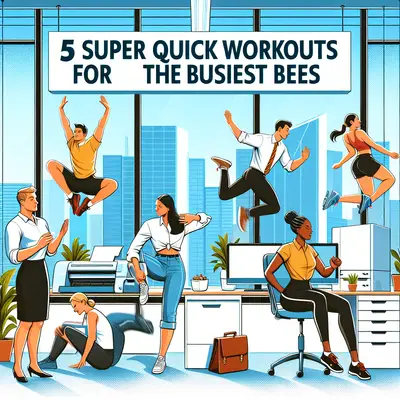
You don’t need a 60-minute sweat fest to feel like you’re “actually” working out. You need smart, fast moves that wake up your muscles, clear your head, and fit between real-life chaos. These rapid resets are built for people who have deadlines, kids, meetings, and zero time for fitness drama.
Let’s reboot your body in quick, powerful bursts you can actually stick with.
Why Rapid Resets Beat “All-or-Nothing” Workouts
The all-or-nothing mindset (“no 45-minute workout = I failed”) kills more fitness progress than junk food ever will. Your body doesn’t care if your movement comes in one long block or several small hits—it just responds to the total load you give it.
Short, intense, or focused mini-sessions can improve strength, cardio health, and energy just like longer workouts, especially if you stack them across your day. Research shows that even brief bouts of moderate-to-vigorous activity can lower disease risk and improve cardiovascular fitness when they add up over time. That means five minutes between Zoom calls counts. Ten minutes before your shower counts. Movement is not a project; it’s a pattern. Rapid resets help you build that pattern without rearranging your entire life.
Quick Tip #1: The 5-Minute Power Circuit
When you’ve got five minutes and low motivation, you need something simple, no-equipment, and no-thinking.
Try this 5-minute circuit:
- 40 seconds bodyweight squats, 20 seconds rest
- 40 seconds push-ups (regular, incline on a desk, or from knees), 20 seconds rest
- 40 seconds alternating reverse lunges, 20 seconds rest
- 40 seconds plank (front or on elbows), 20 seconds rest
- 40 seconds fast marching or jogging in place, 20 seconds rest
Set a timer for 5 minutes and roll straight through. Focus on smooth form, not perfection. If 40 seconds feels too long, use 30 seconds of work and 30 seconds of rest. Repeat this same circuit a few times per week and you’ll notice better stamina, stronger legs, and a more awake brain—without ever stepping into a gym.
Quick Tip #2: Deskbound Strength Without Looking “Extra”
You can sneak serious strength work into your workday without becoming “that person” doing burpees in the hallway.
Try these low-key desk moves:
- Chair Squats: Stand up from your chair and sit back down under control 10–15 times. Keep your knees tracking over your toes and your weight in your heels.
- Desk Push-Offs: Put your hands on the edge of a sturdy desk, step back, and do incline push-ups for 8–12 reps.
- Seated Leg Extensions: While sitting tall, straighten one leg, hold for 3 seconds, lower, then switch; aim for 10–15 reps per side to wake up your quads.
- Glute Squeezes: Sitting upright, squeeze your glutes hard for 5–10 seconds, then relax. Repeat 10–15 times—nobody can even tell you’re working.
Cycle through 2–3 of these whenever you’re stuck on a long call or between emails. These tiny strength hits add up to better posture, fewer aches, and stronger muscles with almost zero time penalty.
Quick Tip #3: Stair Sprints for Instant Cardio
If you have access to stairs—even just a small flight—you’ve got a built-in cardio machine.
Try this quick protocol:
- Walk up and down the stairs once to warm up.
- For 1–3 minutes, go up at a brisk but controlled pace and walk down slowly to recover.
- Repeat for a total of 5 minutes.
Adjust your speed to your fitness level; this should feel challenging but not reckless. Hold the handrail if needed, and keep your eyes on the steps. Stairs quickly spike your heart rate, fire up your glutes and calves, and give you that “I actually worked out” feeling in a very small window. Perfect between meetings, before a shower, or while dinner is in the oven.
Quick Tip #4: TV Break Mobility Reset
Instead of scrolling during every commercial or between episodes, use that built-in break to un-crunch your body.
During a 3–5 minute break, cycle through:
- Cat-Cow: On hands and knees, arch and round your back slowly for 6–10 breaths.
- Hip Flexor Stretch: Half-kneeling, gently shift your weight forward until you feel a stretch in the front of the hip; hold 20–30 seconds per side.
- Chest Opener: Stand tall, interlace fingers behind your back, and lift your hands slightly away from your body to open your chest; hold 20–30 seconds.
- Neck Rolls & Shoulder Circles: Gently roll your shoulders and tilt your head side to side to ease neck tension.
This mini-mobility break loosens screen-tight muscles, supports better posture, and can reduce stiffness that builds up from sitting—no sweat, no equipment, and you can still follow the plot.
Quick Tip #5: Wake-Up Burst Before Your First Scroll
The first thing you do when you wake up sets the tone for your day. Before you touch your phone, give your body a fast wake-up burst.
Try this 3-minute sequence as soon as you’re out of bed:
- 30 seconds marching in place or light jogging
- 30 seconds arm circles (15 seconds forward, 15 seconds backward)
- 30 seconds bodyweight squats
- 30 seconds alternating side lunges
- 30 seconds wall push-ups
- 30 seconds light stretching (reach for the ceiling, then toes, then gentle side bends)
You’ll boost circulation, shake off grogginess, and win a tiny victory before you even hit your notifications. That “I already did something” feeling makes it easier to stack more movement later.
Conclusion
Quick workouts aren’t a downgrade; they’re a strategy. When life is full, rapid resets keep you moving, strong, and energized without demanding huge time blocks or perfect conditions. Pick one tip to start with today—5-minute power circuit, desk strength, stair sprints, TV mobility, or a wake-up burst—and let it become your go-to reset.
You don’t need more time. You need better moments. Use them, and your body will absolutely notice.
Sources
- Physical Activity Guidelines for Americans, 2nd Edition – U.S. Dept. of Health & Human Services - Outlines how bouts of physical activity throughout the day contribute to health.
- World Health Organization – Physical Activity Fact Sheet - Summarizes global recommendations and benefits of regular activity, including short sessions.
- Harvard T.H. Chan School of Public Health – Benefits of Physical Activity - Explains how various forms and durations of movement impact health and weight.
- American Heart Association – Recommendations for Physical Activity in Adults - Details how adults can meet activity goals with flexible, short bouts of exercise.
- Mayo Clinic – Exercise: 7 benefits of regular physical activity - Covers overall health benefits of consistent movement, even in brief sessions.
Key Takeaway
The most important thing to remember from this article is that this information can change how you think about Quick Workouts.