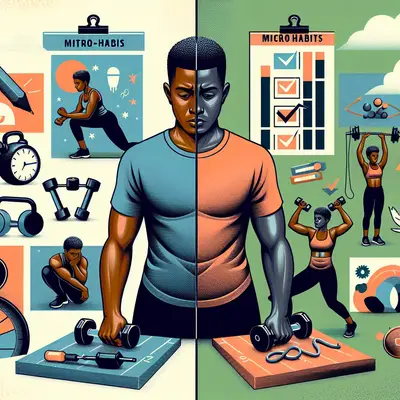
Busy life, zero margin for hour-long workouts? Perfect. You don’t need a full routine to start building a fitter body—you just need tiny actions that are so fast they’re almost impossible to skip. These micro habits stack up quietly in the background while you get on with your day.
Let’s turn “I don’t have time” into “I already did something.”
Why Micro Habits Work When Big Plans Fail
Big fitness plans sound inspiring… until your calendar laughs at them.
Micro habits flip the script by shrinking the barrier to entry. Instead of “work out for 45 minutes,” you commit to things like “20 seconds of squats before a shower” or “10 calf raises while coffee brews.” The goal isn’t to burn out—it’s to build automatic movement.
Psychology research shows that:
- Tiny, consistent actions are easier to turn into habits than big, infrequent efforts.
- Habits latch on to existing routines (like brushing teeth, making coffee, or checking emails).
- Once the habit “cue” is set, your brain does the action with less mental effort.
Think of micro habits as the “autopilot” version of fitness: light effort, repeatable, and stacked onto things you’re already doing.
The 5-Second Rule for Busy-Body Fitness
Here’s your golden rule: if a move takes under 5 seconds to start, it counts.
You don’t need a change of clothes, equipment, or a special playlist. You just need a trigger and a tiny action.
Some easy cues:
- After you send a message → stand up and stretch
- While a page is loading → do a posture reset
- When you hit “brew” on the coffee maker → move something (you or the mug!)
The secret power of micro habits is momentum. Once you’re already moving, it’s way easier to do a little more. But your baseline goal stays tiny so you never feel like you “failed.”
5 Quick Micro Habit Fitness Moves for Busy People
Here are five plug-and-play micro habits you can start today. Pick one or two to test-drive this week.
1. The “Every Doorway” Posture Reset
Every time you walk through a doorway at home or work, do this 5-second posture check:
- Roll your shoulders back and down
- Gently tuck your chin (like making a double chin)
- Engage your core lightly, like bracing before a small cough
This fights the desk hunch, reduces neck tension, and trains your body to find a taller, stronger posture all day long—without any scheduled “workout.”
2. The Email Squat Rule
Before you open a new email or messaging thread, do 5 bodyweight squats.
How to keep it micro:
- Feet about shoulder-width apart
- Sit your hips back like you’re reaching for a chair
- Go as low as feels comfortable, then stand tall
If your day is message-heavy, you’ll rack up dozens of squats over time. If it’s quieter, you’ve still done something—and something beats zero every single time.
3. The Teeth-Brushing Calf Raise Combo
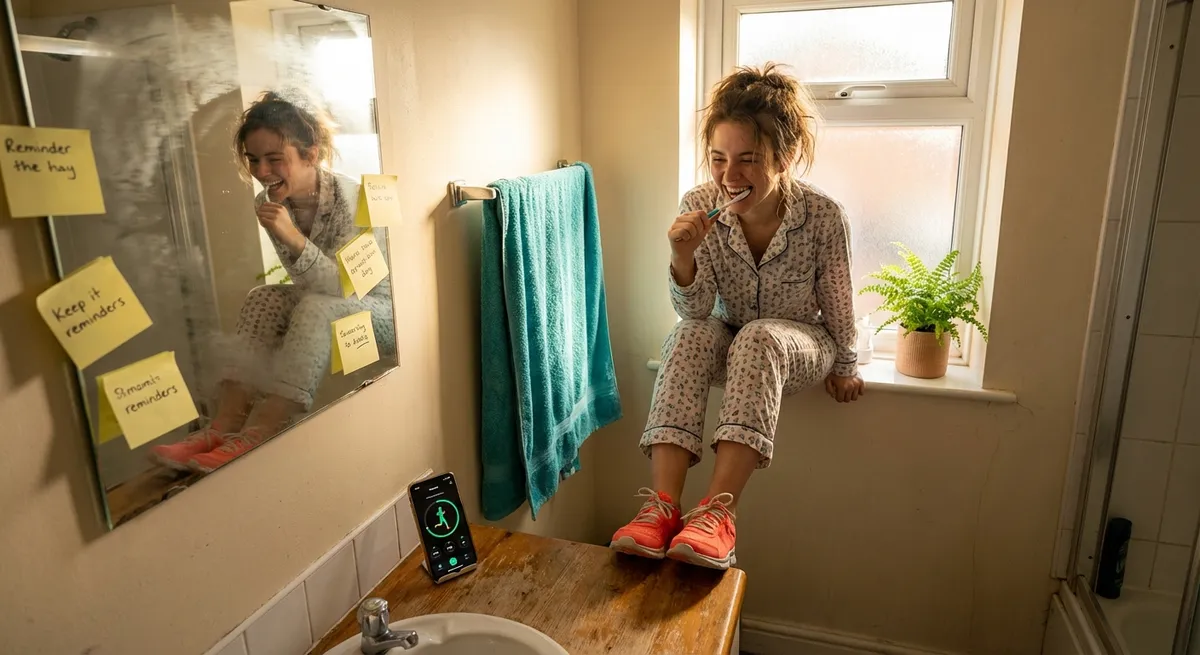
While you brush your teeth (twice a day, right?), do slow calf raises:
- Lift your heels off the ground, pause at the top
- Lower slowly back down
- Repeat until you’re done brushing
You’ve just turned a non-negotiable daily habit into a mini lower-leg workout that helps circulation, ankle strength, and balance—no extra time slot needed.
4. The “Call = Walk” Habit
New rule: if you’re on a phone call and don’t need your screen, you’re walking.
Options:
- Pace your hallway
- Walk laps around your kitchen or office
- If you’re outside, just loop the block
Even slow walking during a few calls can noticeably bump up your daily step count and help counter long stretches of sitting—all without blocking off “cardio time.”
5. The Streaming Strength Snaps
When you start a show, reel, or video, pair the first 60 seconds with one move:
- Day 1: wall push-ups
- Day 2: glute bridges on the floor
- Day 3: standing side leg raises
You only owe yourself one focused minute. If you feel like continuing after the first episode or clip, great. If not, you’ve still attached movement to something you already do daily.
Make Your Micro Habits Stick (Without Overthinking It)
To keep micro habits alive long enough to matter:
- Tie them to anchors you already do: doors, calls, coffee, brushing teeth, messaging.
- Make them laughably small: if you’re resisting it, shrink it again.
- Track wins, not minutes: a quick tally on a sticky note or app is enough.
- Never “make up for” a missed day: just restart on the next cue—no guilt, no “double workout” tax.
Over weeks, these tiny moves rewire how your body spends the day. Instead of long stretches of inactivity, you’ll have frequent sparks of movement that boost energy, circulation, and mood.
You’re not trying to be perfect. You’re trying to be slightly more active, slightly more often.
Conclusion
You don’t need a gym bag, a free hour, or the “perfect” routine. You just need a few, almost-too-easy habits that slip into the cracks of your day and quietly move your body more.
Pick one of the five micro habits, attach it to something you already do, and start today. Tomorrow, you won’t just have a busy schedule—you’ll have a busy schedule and a body that got a little bit stronger in the background.
Sources
- Centers for Disease Control and Prevention – Physical Activity Basics - Overview of recommended activity levels and health benefits of moving more throughout the day
- World Health Organization – Physical Activity - Global guidelines on physical activity and the impact of sedentary behavior
- Harvard T.H. Chan School of Public Health – The Importance of Movement - Explains why frequent light movement is beneficial even if you don’t do long workouts
- American Heart Association – Move More Throughout the Day - Practical ways to add short bursts of activity into a busy workday
- National Institutes of Health – Benefits of Physical Activity - Research-backed benefits of regular movement and how small, consistent actions improve health over time
Key Takeaway
The most important thing to remember from this article is that this information can change how you think about Micro Habits.