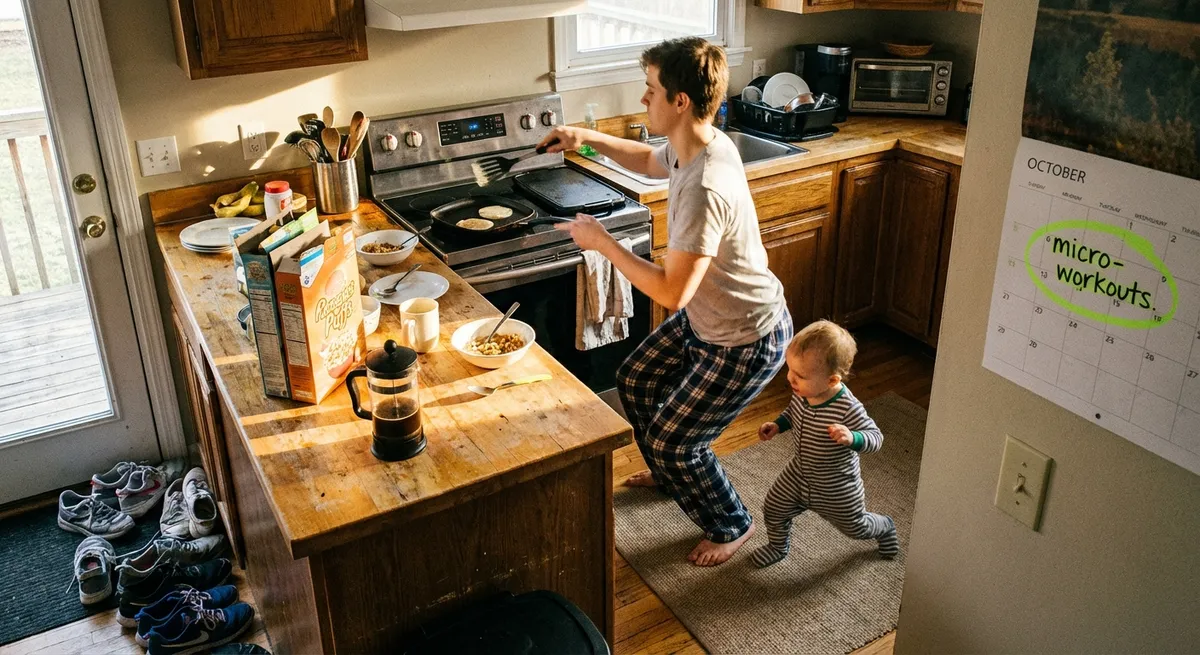
You don’t need a fresh hour in your calendar—you need a smarter way to use the minutes you already have. Zero-drag fitness is all about sliding movement into your day without extra planning, gear, or stress. Think “no friction, no fuss,” just tiny upgrades that quietly stack into real results.
Build a Move-First Morning (Without Waking Up Earlier)
You don’t have to become a 5 a.m. workout warrior to win your mornings. Instead, turn the first 5 minutes after you wake up into a “wake-up circuit” that happens before your brain has time to negotiate. The trick: make it so easy you can do it half-asleep.
Keep it simple: 10 bodyweight squats, 10 countertop push-ups, 20 seconds of marching in place, and a 20-second stretch for your calves and hips. Run through once on rushed days, twice when you have a bit more time. Lay out comfy clothes the night before and clear a small “movement zone” so there’s zero setup required.
This mini routine gets blood flowing, wakes your nervous system, and nudges your metabolism without demanding a full workout block. Over time, your body starts to expect movement in the morning, making longer or harder sessions easier to plug in when your schedule allows. Bonus: that early win can lift your mood and focus for the entire day.
Turn Transitions Into Sneaky Strength Training
You already move from room to room, car to office, meeting to meeting. Turn those little “in between” moments into strength boosts with a one-move rule: every transition triggers a quick exercise.
Heading to the bathroom? Do 8–12 wall push-ups afterward. Walking into the kitchen? Drop into 10 squats before you grab your snack. Done with a Zoom call? Hold a 20–30 second plank before starting the next task. Waiting for the microwave? Calf raises until it beeps.
By tying moves to routines you already do, you save the mental energy of deciding when to exercise. These micro-strength breaks help maintain muscle, support joint health, and break up sitting time—which research links to better blood sugar and heart health when you move even a little every 30–60 minutes. It’s not “all or nothing”; it’s “always a little something.”
Upgrade Screen Time Into Movement Time
You don’t have to ditch your shows, podcasts, or scroll time—just pair them with motion. Attach simple rules to the entertainment you already love so fitness rides shotgun instead of fighting for calendar space.
Watching a series? During every opening or ad break, walk laps around the room or do light mobility (arm circles, hip circles, easy lunges). Listening to a podcast? Make it your cue for a 10–15 minute walk, even if it’s just around your block or hallway. Scrolling social media? Stand up and march in place, shift your weight from foot to foot, or alternate heel raises and mini squats.
This turns passive time into active time without feeling like a “workout block.” You’ll rack up more daily steps, loosen tight hips and shoulders, and burn extra calories—all while still enjoying your usual downtime. The goal isn’t perfection; it’s making “sitting totally still” the exception, not the default.
Stack Fitness Onto Things You Can’t Skip
Some things are non-negotiable: brushing your teeth, making coffee, waiting for your computer to boot, or standing in line. Use these “must-do” moments as anchors for fitness habits so movement is attached to something that already happens every single day.
While your coffee brews, do 60 seconds of alternating reverse lunges holding the counter for balance. Brushing your teeth? Stand on one leg for 30 seconds each side to train ankle strength and balance. Waiting for a file to download or a meeting room to open? Do seated knee extensions or glute squeezes right in your chair.
By habit stacking like this, you don’t need to remember extra tasks—your brain just knows: “When X happens, I move like Y.” Over time, these built-in moves reinforce mobility, protect joints, and keep you out of the “I’m too busy to do anything” trap. It’s fitness on autopilot, powered by things you can’t skip anyway.
Use a Power-Pair Timer to Make Workouts Actually Happen
If long workouts keep getting bumped, shrink the commitment and pair it with something you’re already doing. Set a 10–12 minute timer and create a “power pair”: two exercises you alternate until the timer ends.
Examples:
- Squats + push-ups (on the floor or against a wall)
- Glute bridges + dead bugs
- Step-ups on a sturdy step + slow, controlled chair dips
Hit this mini-session right before a daily anchor like your shower, lunch, or end-of-day shutdown. Knowing it’s capped at a specific, short time makes it way easier to start, and consistency beats intensity when life is busy. Over weeks, these tiny time-boxed sessions build strength, stamina, and confidence without wrecking your schedule.
Conclusion
You don’t need a brand-new lifestyle, just smarter use of the life you already have. When movement piggybacks on habits, transitions, and screen time, fitness stops feeling like a separate “project” and starts feeling like part of your day. Pick one tip, plug it in today, and let the wins stack quietly in the background—zero drag, all progress.
Sources
- Physical Activity Guidelines for Americans - U.S. Department of Health & Human Services overview of recommended activity levels and benefits
- Too Much Sitting and All-Cause Mortality - Research article on sedentary time and health outcomes (National Institutes of Health / NCBI)
- Physical Activity and Cardiovascular Health - American Heart Association resources on why regular movement matters for heart health
- Breaking Up Prolonged Sitting with Light Activity Improves Glucose and Insulin - Study on the benefits of short movement breaks during long sitting periods (Diabetes journal)
- Benefits of Physical Activity - CDC summary of health impacts of even modest physical activity
Key Takeaway
The most important thing to remember from this article is that this information can change how you think about Time Savers.