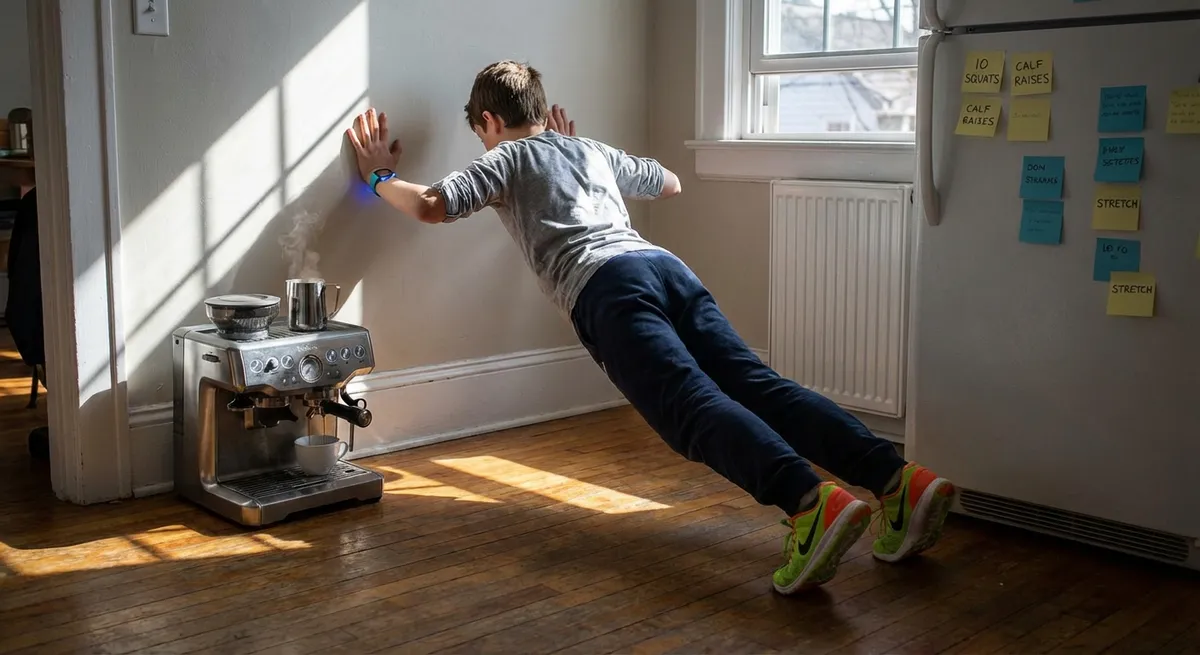
Busy isn’t the enemy of fitness—friction is. The more steps, gear, and decisions your workout needs, the easier it is to skip. The trick? Strip fitness down to fast, automatic moves that slide into your day with almost zero prep. No drama, no 90‑minute routines—just efficient, repeatable wins.
Below are five ultra-quick, time-saving fitness moves busy people can use to stay active without rearranging their calendar.
The “First 5 Minutes” Wake-Up Move
Before you touch your phone in the morning, give your body the first five minutes of your day. Think of it as your physical on-switch instead of a full workout.
Roll out of bed and cycle through simple moves: bodyweight squats, wall pushups, marching in place, and slow hip circles. This short sequence wakes up your joints, gets blood flowing, and nudges your brain into “I’m an active person today” mode. Because it’s only five minutes, your brain has no time to negotiate or say “later.” Over time, this micro-routine builds consistency and makes bigger workouts feel less intimidating. Keep it friction-free: no mat, no special clothes—just you, the floor, and five focused minutes.
“Transit Training” While You’re Going Nowhere
Turn dead time into movement time anytime you’re stuck waiting. Those 30–90 second pockets add up fast across a day.
While the coffee brews, hold a wall sit. During a microwave countdown, do calf raises. Waiting for a video call to start? March in place or do standing hip abductions (lift one leg out to the side, then switch). Because you’re anchored to something you’re already doing—waiting—you’re not adding time, just adding movement. These mini bursts help counter long sitting stretches, gently boost heart rate, and keep your muscles from going completely offline during desk-heavy days. The key is to attach one move to each repeat situation so it becomes automatic.
Desk-Mode Strength Without Leaving Your Workspace
You don’t need a gym to build strength—you just need gravity and a chair. Desk-mode strength moves let you train without “going to work out.”
Between tasks, try a set of chair squats (sit and stand without using your hands), incline pushups on your desk, or slow, controlled heel raises while you type. These moves recruit big muscle groups like your quads, glutes, and chest, which are major calorie burners and posture protectors. Keep reps moderate and controlled so you don’t show up sweaty to your next meeting. Set a timer to chime every 60–90 minutes, and when it goes off, you owe yourself one quick set. Over the course of a day, those sets stack up into serious work.
Turn Chores Into Mini Cardio Sessions
If you’re doing chores anyway, you might as well upgrade them to light cardio. No extra time, just more intentional movement.
While vacuuming or sweeping, pick up the pace slightly and add walking lunges across the room. Folding laundry? Stand instead of sit and add a calf raise every time you place an item on the pile. Climbing stairs at home? Double up trips when you safely can, or take them two at a time for an extra lower-body push. By increasing tempo and range of motion just a bit, everyday tasks sneakily raise your heart rate. The hidden win: you start to associate household tasks with movement instead of just “more work,” making activity feel woven into real life, not separate from it.
Tiny Intensity Bursts During Normal Walking
You don’t have to carve out a full walk to get benefits; you can level up the walking you already do. Think of it as “spice shots” for your daily steps.
On your next hallway, parking lot, or grocery-store walk, pick a landmark ahead (a door, tree, or aisle sign). From here to there, speed up your pace, pump your arms, and slightly lengthen your stride. Once you hit the landmark, return to normal walking. These 20–60 second surges act like micro-intervals, improving cardio fitness and waking up your muscles without needing dedicated workout time. Sprinkle a few of these bursts into the walking you’re already doing, and you’ll squeeze more training effect out of the same minutes.
Conclusion
You don’t need a perfect schedule to stay active—you just need repeatable moves that fit into the schedule you already have. Anchor quick strength and cardio bursts to things you’re already doing: waking up, waiting, working, cleaning, walking. Over time, these time-saving strategies stack into real fitness progress without demanding big blocks on your calendar. Keep it light, keep it simple, and let consistency—not perfection—do the heavy lifting.
Sources
- Centers for Disease Control and Prevention – Physical Activity Basics - Overview of recommended activity levels and health benefits of moving more
- American Heart Association – How to Be More Active - Practical ideas for adding activity into everyday life
- Harvard T.H. Chan School of Public Health – Physical Activity and Health - Summarizes research on physical activity, intensity, and health outcomes
- Mayo Clinic – Exercise: 7 benefits of regular physical activity - Explains broad benefits of consistent exercise, even in short bouts
Key Takeaway
The most important thing to remember from this article is that this information can change how you think about Time Savers.