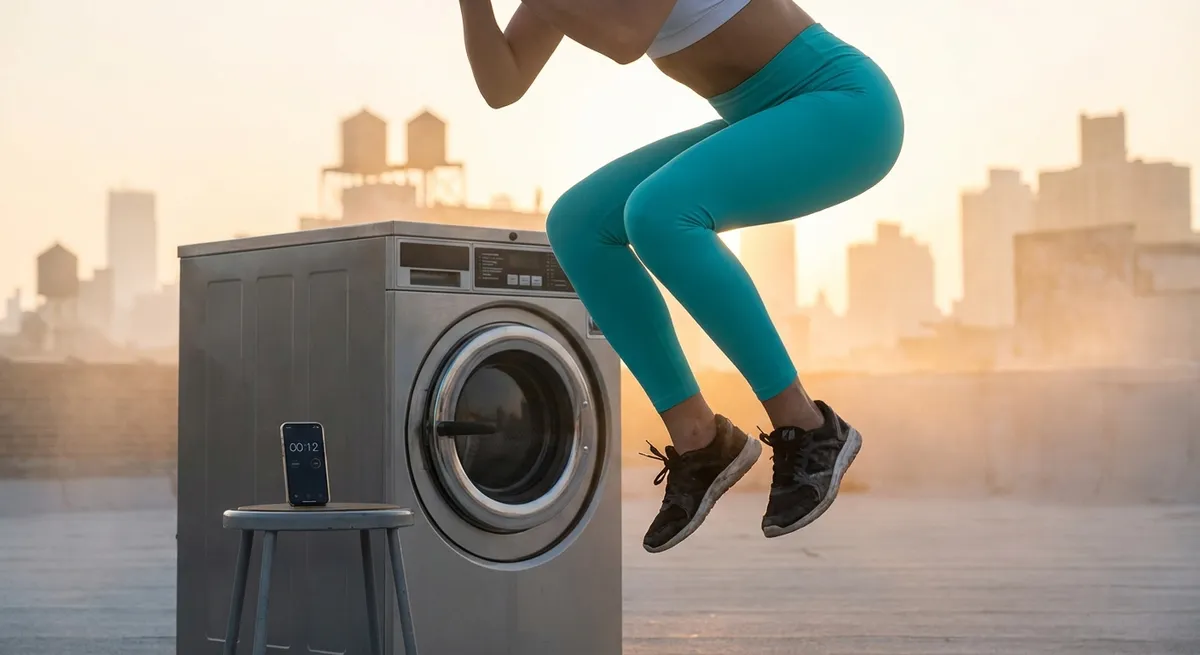
You don’t need a color-coded workout spreadsheet to get fitter—you just need a few tiny levers you can pull on the days that are already slammed. These five moves slide into your schedule without demanding a full “gym person” identity. Think: low-friction, high-impact, done-before-your-coffee-gets-cold energy.
Make Walking Your Default Transport Upgrade
Walking is the stealth MVP of busy-person fitness. It doesn’t require a change of clothes, gear, or a warm-up—just a decision. Park at the far end of the lot, take the stairs for 2–3 floors, or walk the last bus stop home instead of scrolling at the station. Each mini-choice adds steps without needing a “workout window.”
If you’re desk-bound, set a 25- or 30-minute timer and take a two-minute lap around your space when it goes off. That’s barely a song length, but across an 8-hour day you can rack up a surprising step count. Research consistently links higher daily step counts with better heart health, lower mortality risk, and improved mood, even when those steps are scattered through the day. No treadmill selfie required.
Turn Waiting Time Into Strength Time
Lines, microwaves, Zoom “waiting for others to join”—that’s all free workout real estate. Instead of doomscrolling while you wait, drop in a tiny strength move: countertop pushups while coffee brews, calf raises while brushing your teeth, or bodyweight squats while the printer churns.
Want a simple rule? Pick one “default move” and attach it to a daily moment. Example: every time you start the kettle, do 10 squats. That might not sound like much, but if you brew 3–4 times a day, that’s 30–40 squats—more than many traditional workouts sneak in. Strength work keeps muscles and bones strong, supports your joints, and boosts metabolism long after the actual movement is over.
Shrink Workouts, Crank Up Intensity (Smartly)
You don’t always need 45 minutes—sometimes you just need five spicy ones. High-effort intervals can deliver serious fitness benefits in a fraction of the time, as long as you keep them safe and tailored to your level. Think: 20 seconds of brisk effort, 40 seconds easy, repeated for 5–10 minutes.
You can do this walking, climbing stairs, cycling, marching in place, or shadowboxing in your living room. The magic is alternating between “this is definitely work” and “this is my recovery pace.” That contrast helps your heart and lungs adapt quickly and efficiently. If you’re new to intense exercise or have any health conditions, start extra gentle and get clearance from a healthcare professional first—intensity is relative, not a punishment.
Put One Piece of Equipment Where You Actually Live
Out of sight, out of mind is real—so turn it around. Place a resistance band, light dumbbell, or kettlebell somewhere you constantly walk past: near the couch, by your desk, next to the coffee station. The visual cue reminds your brain, “Hey, movement is an option right now.”
Give yourself a tiny “drive-by” rule: every time you pass that piece of equipment during a certain time window (say, 6–8 p.m.), do one quick set—8–12 reps of any safe move you know. Banded rows, goblet squats, overhead presses, or deadlifts with a dumbbell all work. In under a minute, you get a strength stimulus that, repeated over days and weeks, quietly compounds into actual progress.
Create a 5-Minute “Emergency Routine” and Memorize It
Decision fatigue kills more workouts than laziness. Solve it once by building your personal “break-glass” routine: a dead-simple, no-think mini workout you can do anywhere, anytime. For example:
- 30 seconds marching or jogging in place
- 10 squats
- 10 pushups (wall, counter, or floor)
- 20 seconds plank (front or on knees)
- 30 seconds of fast feet or high-knee marching
Repeat 2–3 times if you’ve got the juice; do it once if you’re wiped. The point is consistency, not perfection. Having this pre-loaded in your brain means when your day explodes, you don’t have to negotiate with yourself—you just hit play on the routine and move on with your life a little fitter than you woke up.
Conclusion
You don’t need a perfect routine, just repeatable ones. Walk a bit more, lift something a bit heavier, breathe a bit harder for a few minutes, and sprinkle those moments where your day already exists. The win isn’t building a fitness life that looks impressive—it’s building one that actually fits. Start with one tip today, keep it embarrassingly simple, and let consistency do the heavy lifting.
Sources
- Centers for Disease Control and Prevention – Physical Activity Basics – Overview of recommended activity levels and health benefits
- Harvard T.H. Chan School of Public Health – Walking and Cardiovascular Health – Evidence on how walking supports heart health and longevity
- Mayo Clinic – Interval Training: Intensity Variation for Fitness – Explanation of interval training and how to do it safely
- National Institute on Aging – Strength, Balance, and Flexibility Exercises – Research-backed guidance on strength and functional exercises for everyday life
Key Takeaway
The most important thing to remember from this article is that this information can change how you think about Fitness Tips.