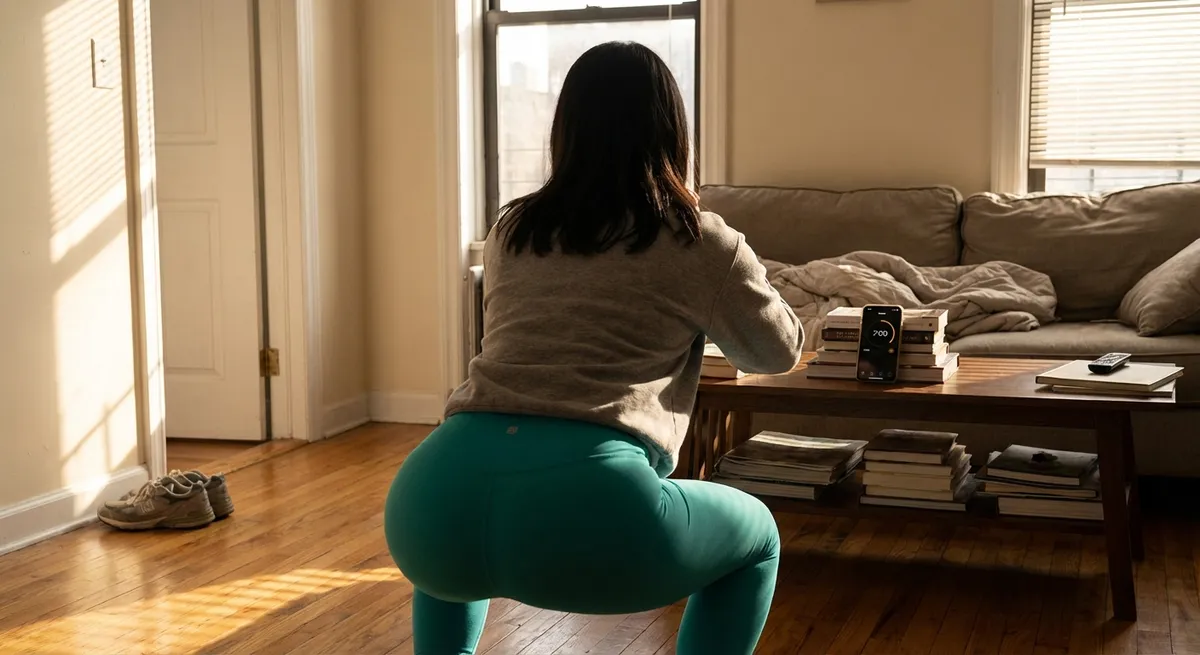
You don’t need a color-coded workout calendar or a two-hour gym block to get fitter. You need tiny, sharp moves that slide into your day before your schedule even realizes what happened. These smart, time-efficient tactics help you build real strength, stamina, and energy without overhauling your life.
Below are five quick, no-excuses fitness wins built for people whose to-do list already needs its own assistant.
1. The “While It Loads” Rule
Turn every loading screen into a mini workout signal.
Anytime you’re waiting—coffee brewing, Zoom launching, files uploading—drop into a quick move: squats, wall pushups, calf raises, or marching in place. Most of these waits are 30–90 seconds long, which is perfect for a short burst of movement.
This keeps your body from staying glued in one position for hours, helps circulation, and gently nudges your daily step count upward. It’s also nearly willpower-proof: you’re not “finding time,” you’re hijacking time that was already wasted. Over a full day of tech delays and coffee breaks, you can quietly stack several minutes of quality movement without touching your schedule.
2. Power-Packed Three-Minute Warmup
Instead of skipping workouts because you “don’t have time for a full session,” commit to a three-minute warmup you always do.
Set a timer for 3 minutes and cycle through:
- 30 seconds: brisk marching in place
- 30 seconds: bodyweight squats
- 30 seconds: arm circles (forward/backward)
- 30 seconds: alternating reverse lunges (or step-backs)
- 60 seconds: shadow boxing or fast side steps
By the time you’re done, you’re already moving, your heart rate is up, and the “I don’t feel like it” barrier is lower. Some days you’ll stop after the warmup and that’s still a win—other days you’ll feel good enough to add 5–10 more minutes. The magic is that the decision becomes tiny: “I only have to do three minutes.”
3. Strength Moves You Can Do in Regular Clothes
When time is tight, changing into full workout gear can be a sneaky barrier. Solve it with moves you can pull off in work clothes, loungewear, or even business casual.
These are ideal:
- Wall sits – Back against the wall, knees bent like you’re sitting in an invisible chair. Hold 20–45 seconds.
- Desk or counter pushups – Hands on a sturdy surface, body in a straight line, lower and press.
- Standing leg raises – Hold a chair or counter, lift one leg to the side or back, slow and controlled.
- Seated core brace – Sit tall, tighten your core like you’re bracing for a poke, hold 10 seconds, release, repeat.
Scatter these across your day: 1–2 sets whenever you walk into the kitchen, finish a call, or wrap a meeting. You’re training strength without an outfit change, a mat, or a gym.
4. Commute and Chore Upgrades
You’re already commuting and doing chores—upgrade them into low-key training.
- If you drive or take transit:
- Park a bit farther or get off one stop early for a short walk.
- Use red lights or transit stops for seated calf raises and posture resets.
- If you work from home:
- Turn at least one call per day into a “walk and talk” (inside loops or outside).
- Chores:
- Turn vacuuming, mopping, or tidying into a mini cardio session by adding a bit more pace and deliberate squats/lunges.
You’re not “adding” workouts—you’re doubling the value of time you’re already spending on something else.
5. The 10-Rep Anchor
Pick three to four simple bodyweight moves:
- Squats or sit-to-stands from a chair
- Incline pushups (hands on counter or desk)
- Glute bridges (if you can lie down) or standing hip hinges
- Dead bugs or bird-dogs for core stability
Now create a rule: every time a specific cue happens—end of a bathroom break, finishing an email batch, or before you sit down to stream—you perform 10 reps of one move.
Ten reps take less than 30 seconds, but if your daily routines trigger this anchor several times, you end up with solid volume by bedtime. That’s how you sneak in strength training without booking “leg day” on your calendar.
Conclusion
You don’t need endless motivation; you need smart triggers that quietly stack movement into the day you already live. Use waits, commutes, chores, and tiny anchors to build fitness that fits inside your real life, not the fantasy version with empty afternoons and a personal chef. Start with one tip from this list today and let it snowball—your schedule won’t even know it’s been upgraded.
Sources
- Centers for Disease Control and Prevention – Physical Activity Basics - Guidelines on how much movement adults need and why short bouts still matter
- American Heart Association – Adding More Activity to Your Daily Routine - Practical ideas for weaving activity into busy schedules
- Mayo Clinic – How Much Exercise Do You Really Need? - Overview of time-efficient exercise recommendations
- Harvard T.H. Chan School of Public Health – Physical Activity and Health - Evidence behind regular movement and disease risk reduction
Key Takeaway
The most important thing to remember from this article is that this information can change how you think about Time Savers.