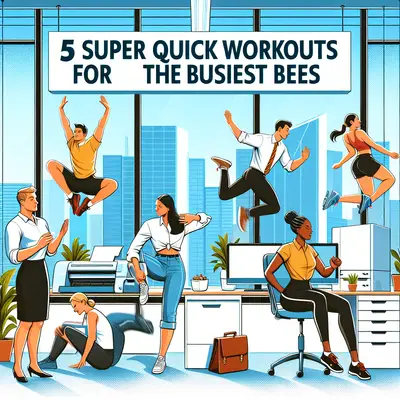
You don’t need a “perfect” schedule, a fancy gym, or a 60‑minute block on your calendar to stay fit. You just need smart moves that slide into your real life. These quick hits are built for people who are juggling work, family, and about 47 open browser tabs—but still want to feel strong, energized, and in control.
Why Quick Workouts Actually Work
Short workouts aren’t a backup plan; they’re a legit strategy.
Research shows even brief bursts of moderate to vigorous movement can improve heart health, energy, and mood. Consistency matters more than having the “ideal” routine, and that’s where quick workouts shine. They’re easier to start, easier to finish, and easier to repeat tomorrow.
Think of these as “fitness checkpoints” during your day. Instead of waiting for a big block of time that never shows up, you scatter smaller moments of effort across your schedule. Over a week, those minutes stack up into real progress—without blowing up your calendar.
Tip 1: Turn Waiting Time Into Movement Time
You already spend time waiting—coffee brewing, files loading, kids getting their shoes on. Turn that dead time into a mini workout.
While the kettle boils or your meeting room fills, do:
- 10–15 bodyweight squats
- 10 countertop push-ups
- 20–30 seconds of fast marching in place
Stack 2–3 moves back-to-back and you’ve got a mini circuit. Keep it casual: no need to change clothes or break into a full sweat. The goal is “wake up your body,” not “destroy your quads.”
Pro move: Attach one move to a daily trigger. Example: Every time you microwave something, you do squats until the beep.
Tip 2: Use the “3-Minute Power Block” Rule
When you feel too tired or too busy to work out, shrink the goal: just three minutes of effort. That’s it.
Here’s a simple three-minute power block you can do anywhere:
- Minute 1: March or jog in place, gradually speeding up
- Minute 2: 10 squats + 10 push-ups (wall or countertop if needed), repeat
- Minute 3: 20 seconds fast, 20 seconds slow of any move (marching, step-ups, jumping jacks), then deep breathing
The secret: once you start moving, your brain often wants to keep going. If you feel good after three minutes, repeat the block. If not, you still did something—which beats “I’ll start next week.”
Use this rule whenever your brain says, “Not today.” Three minutes is always possible.
Tip 3: Make Your Commute Work For You
You don’t have to overhaul your entire commute; just nudge it to be a little more active.
Options to try:
- Get off public transit one stop earlier and walk the rest
- Park at the far edge of the lot and speed-walk to the door
- If you work from home, do a 5–7 minute brisk walk “commute” around the block before logging in and after logging out
On days you’re really slammed, walk while you’re on a call (if the setting allows). Keep your camera off, pop in earbuds, and pace. Even light walking boosts circulation, brain function, and energy, helping you show up sharper for your work and your workouts.
Think of movement as part of “going to work” instead of something you squeeze in after.
Tip 4: Mini Strength Sessions at Home (No Gear Needed)
Strength training doesn’t need equipment or a full routine. Short strength “snacks” help maintain muscle, protect your joints, and support metabolism.
Rotate through a few simple moves:
- Squats or sit-to-stands from a chair
- Push-ups (wall, countertop, or floor)
- Glute bridges on the floor or couch edge
- Standing calf raises while brushing your teeth
- Plank hold on elbows or against a wall
Pick 2–3 moves, do 8–12 reps of each, rest briefly, and repeat once. Done in 5 minutes or less.
Anchor these to daily habits: push-ups after you shut your laptop, bridges before bed, squats while dinner simmers. Over time, you’re building a strong, resilient body in tiny, repeatable chunks.
Tip 5: Schedule “Energy Breaks,” Not “Workouts”
The word “workout” can feel heavy. Rebrand them as “energy breaks” and your brain stops treating them like an all-or-nothing project.
Once or twice a day, block off 5–10 minutes on your calendar and label it “Energy Break.” When it pops up, you move—no negotiations. Ideas:
- 5 minutes of brisk hallway or stair walking
- A quick dance session to one or two high-energy songs
- A simple circuit: 10 squats, 10 push-ups, 10 lunges (or steps), repeat for time
These micro fitness moments reset your posture, sharpen your focus, and fight the afternoon crash. Treat them like a non-negotiable meeting with Future You—the one who wants to feel good at 3 p.m., not just at 9 a.m.
Conclusion
You don’t need perfect conditions, a gym membership, or a 45-minute block of sacred exercise time. You need small, repeatable moves you can actually do on your busiest days.
Turn waiting into movement, shrink your goal to three-minute power blocks, build activity into your commute, drop in quick strength sessions, and protect your energy breaks like appointments. That’s how real people in real schedules stay fit.
You’re not behind—you’re one small decision away from your next win.
Sources
- Physical Activity Guidelines for Americans - U.S. Department of Health and Human Services recommendations on how much movement you need and how short bouts can add up
- High-Intensity Incidental Physical Activity and Health - British Journal of Sports Medicine article on how brief vigorous activities in daily life benefit health
- The Benefits of Strength Training - CDC overview of why building muscle matters, even with simple bodyweight moves
- Walking: Your Steps to Health - Harvard T.H. Chan School of Public Health breakdown on walking as accessible cardio for busy people
- How Exercise Benefits Your Mental Health - American Psychological Association summary of exercise’s impact on stress and mood
Key Takeaway
The most important thing to remember from this article is that this information can change how you think about Quick Workouts.